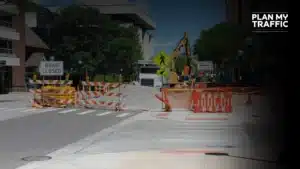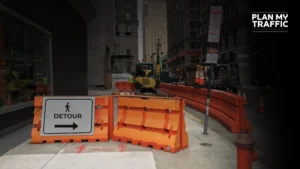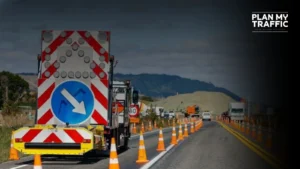
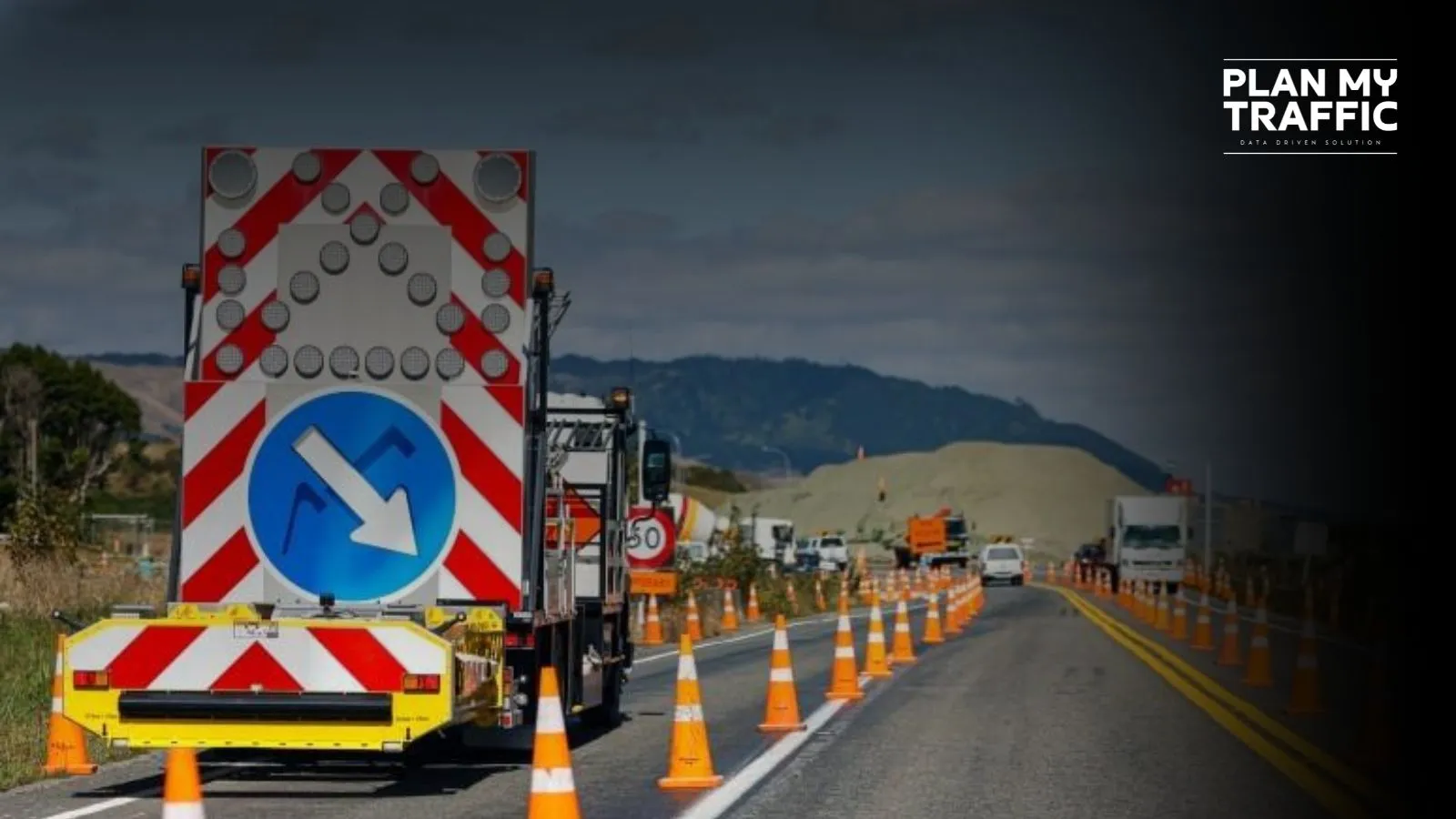
If you’re setting up a road construction or maintenance site in British Columbia, knowing the five work zone areas is a fundamental requirement. A Traffic Management Plan (TMP) in BC is structured around these five areas, each with a defined role in protecting workers, guiding drivers, and keeping the public safe.
Here’s a straightforward breakdown of all five – what they are, what they do, and why each one matters on a BC job site.
What Are Work Zone Areas?
Work zone areas are defined sections within a road construction corridor that manage how traffic moves through or around an active work site. In BC, TMPs follow the Traffic Management Manual for Work on Roadways (TMM), published by the BC Ministry of Transportation and Transit (MoTT). Every compliant work zone is built around the same five-area framework.
The Five Work Zone Areas
1. Advance Warning Area
This is the first area drivers encounter. Its purpose is to alert road users that a work zone is ahead and give them enough distance to slow down and prepare.
In BC, this area uses a sequence of warning signs – such as “Road Work Ahead” or “Construction Ahead” spaced at distances calculated by posted speed. Higher-speed roads require longer advance warning distances. This area is critical because insufficient warning is a leading cause of rear-end collisions in construction zones.
2. Transition Area
The transition area shifts traffic from its normal travel path to an alternate path around the work site. This is where lane closures, lateral shifts, or merges happen.
BC work zones use tapers, diagonal arrangements of cones or drums to guide this movement. Common taper types include:
-
- Merging Taper — closes a lane and guides traffic into an adjacent one
- Shifting Taper — moves traffic laterally while maintaining the same number of lanes
- Shoulder Taper — signals that the shoulder is part of the active work area
Taper lengths in BC are calculated using standard formulas based on lane width and speed. A taper that’s too short forces abrupt lane changes and raises crash risk significantly.
3. Activity Area
The activity area is where the actual work takes place. It is divided into two zones:
-
- Work Space — the area occupied by workers, equipment, and materials
- Buffer Space — a protective gap between moving traffic and the work space
The buffer space acts as a safety margin. If a vehicle drifts out of its lane, this space provides some protection before it reaches workers. BC’s TMM specifies both longitudinal and lateral buffer distances based on vehicle speeds and site conditions.
This is the highest-risk area on any work site, and every other zone exists to protect what happens here.
4. Termination Area
The termination area ends the work zone and returns traffic to normal road conditions. It typically includes a short end taper guiding vehicles back into standard lanes, along with signage like “End Construction” or “Resume Speed.”
Although it’s the simplest of the five areas, a poorly set-up termination area can cause driver confusion or sudden acceleration both of which create hazards for workers still in the zone.
5. The Five Areas as a System
BC’s TMM treats all five work zone areas as a connected system, not standalone segments. Traffic control devices – signs, cones, barriers, portable signals, and Traffic Control Persons (TCPs) are deployed across all five areas in coordination.
For high-volume roads or longer-term projects, contractors may also be required to include portable traffic signals for alternating one-way flow, pilot vehicles to escort traffic through restricted sections, and Changeable Message Signs (CMS) in the advance warning area. Every device must be placed according to the approved TMP, and any changes require updated approval from MoTT or the relevant road authority.
Setting up the activity area incorrectly puts your workers in danger. Let us review your TMP before you break ground.
Book Your TMP Review
Quick Reference: The Five Work Zone Areas
| Work Zone Area | Primary Purpose |
|---|---|
| Advance Warning Area | Alerts drivers to the upcoming work zone |
| Transition Area | Shifts traffic away from the work space |
| Activity Area | Where work occurs; protected by buffer space |
| Termination Area | Returns traffic to normal travel conditions |
Ready to Build a Compliant TMP for Your BC Project?
Understanding the five work zone areas is the foundation but turning that knowledge into a fully approved Traffic Management Plan takes technical precision and familiarity with BC’s TMM requirements. PlanMyTraffic designs TMP and Traffic Control Plans specifically built to meet MoTT standards, with fast turnaround and a free revision guarantee if your plan gets rejected. Whether you’re managing a small utility job or a large highway project in BC, their team handles the plan so you can focus on getting the work done safely and on time.
Conclusion
For BC contractors, understanding work zone areas is the foundation of every safe and compliant Traffic Management Plan. Each of the five areas plays a distinct role, and when they’re set up correctly in sequence, with the right devices they protect both road workers and the travelling public. Whether you’re preparing a TMP for a small utility job or a major highway project, these five areas are always the starting point.
Don’t risk a rejection or a stop-work order. Fill out the form below and PlanMyTraffic will review your project and deliver a TMP built to BC’s TMM and MoTT standards, fast turnaround.
Request a Quote
Ready to Work Together? Build a project with us!
Frequently Asked Questions
1. Are all five work zone areas required on every BC job site?
Yes, BC’s Traffic Management Manual requires that every TMP account for all five areas. The scale and devices used will vary by site, speed limit, and road classification, but the framework applies regardless of project size.
2. Who is responsible for setting up work zone areas correctly in BC?
The contractor is responsible for ensuring the TMP is followed on site. A qualified Traffic Control Supervisor (TCS) typically oversees the setup, while Traffic Control Persons (TCPs) manage live traffic within the zone.
3. What happens if a work zone area is set up incorrectly in BC?
Non-compliant work zones can result in stop-work orders, fines under the Motor Vehicle Act, or WorkSafeBC penalties. More seriously, an improperly configured zone significantly increases the risk of worker injury or fatality.
4. How are taper lengths calculated in BC work zones?
Taper lengths are calculated using a formula that factors in lane width and posted speed limit. The BC TMM provides specific tables and formulas that contractors must follow when designing the transition area of any work zone.