Traffic Impact Assessment Study (TIA)
Comprehensive traffic impact studies for safe, efficient, and sustainable development across Canada.
- Home
- Traffic Impact Assessment Study (TIA)
What Is a Traffic Impact Assessment (TIA)?
Evaluating Development Impact on Transportation Networks
Core TIA Components
- Trip Generation Analysis: Estimating new vehicle, pedestrian, and transit trips.
- Traffic Distribution Modeling: Mapping trip destinations and routes.
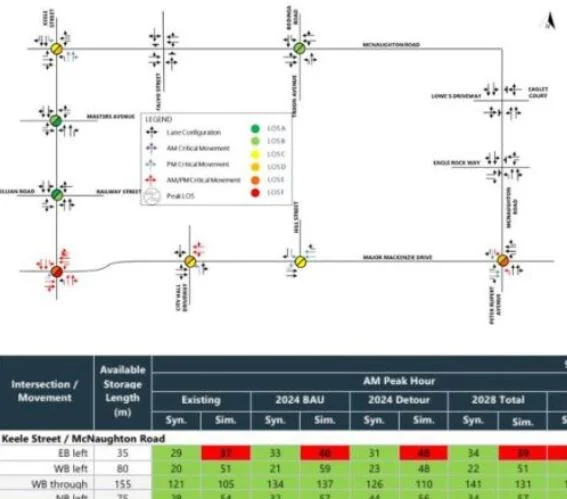
- Intersection Performance Evaluation: LOS, delays, queuing, and safety.
- Infrastructure Needs Assessment: Identifying required upgrades (signals, turn lanes, sidewalks).
- Multimodal Impact Review: Effects on public transit, cycling, and pedestrian infrastructure.
Ground-Level Issues Solved by TIA
Addressing Real World Traffic Challenges Across Canadian Provinces
TIAs help developers, municipalities, and contractors across BC, Ontario, Alberta, Manitoba, and Saskatchewan proactively manage traffic-related issues before development begins ensuring smoother Ministry and municipal approvals and safer communities.
Key Benefits
- Traffic Congestion Mitigation: Identifying bottlenecks on provincial highways and municipal arterials across BC, Ontario, Alberta, Manitoba, and Saskatchewan and proposing practical solutions.
- Road Safety Enhancements: Improving intersections, crossings, and signage in compliance with local standards and provincial road safety requirements.
- Infrastructure Planning: Determining needs for new roads, bike paths, and transit stops aligned with provincial transportation master plans.
- Access & Egress Optimization: Designing safe entry and exit points that meet MoTT, MTO, Alberta TEC, Manitoba MIT, and Saskatchewan Highways permit conditions.
- Community Impact Management: Addressing noise, pollution, and disruption concerns raised during municipal public hearings and planning reviews.
- Regulatory Compliance: Meeting municipal and provincial/state approval requirements.

Future Ready Traffic Impact Studies
Integrating Technology, Sustainability & Equity for Canadian Projects
Modern TIAs go beyond traditional traffic counts. For projects across BC, Ontario, Alberta, Manitoba, and Saskatchewan, we incorporate smart mobility planning, climate resilience, and equity-focused analysis to meet the evolving requirements of Canadian provincial Ministries and municipal planning departments.
Innovative TIA Features
- Data-Driven Safety Analysis (DDSA): Predictive crash modelling and AI simulations aligned with Canadian road safety standards and provincial collision data.
- Smart Mobility Integration: AVs, ride-sharing, and micro-mobility considerations reflecting the active transportation priorities of BC, Ontario, Alberta, Manitoba, and Saskatchewan.
- Sustainability Planning: Emissions analysis and green transport promotion supporting municipal climate action plans across Canadian provinces.
- Multimodal & Equity Focus: Inclusive access for pedestrians, cyclists, transit users, and underserved communities in line with Canadian Complete Streets and Vision Zero policies.
- Real Time Monitoring: IoT sensors, GPS, and mobile data for dynamic traffic insights tailored to Canadian urban and rural corridor conditions.
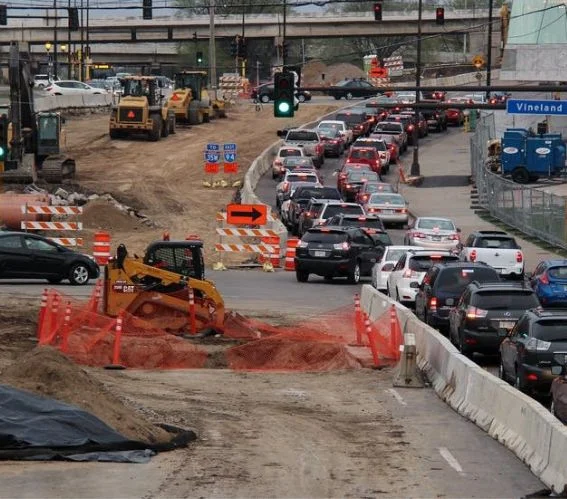
TIA for Temporary Construction Zones
Short-Term Impact Analysis for Canadian Roadwork & Infrastructure Projects
We provide focused TIA services for temporary construction zones across BC, Ontario, Alberta, Manitoba, and Saskatchewan ensuring minimal disruption and maximum safety while meeting provincial Ministry of Transportation permit conditions and municipal construction traffic requirements.
Key Features
- Assessment of traffic flow changes due to lane closures or detours on provincial highways and municipal arterials across BC, Ontario, Alberta, Manitoba, and Saskatchewan.
- Impact on peak hour congestion and travel times within Canadian urban corridors and rural highway segments.
- Coordination with Temporary Traffic Control (TTC) and Traffic Management Plans (TMP) meeting MoTT, MTO, Alberta TEC, Manitoba MIT, and Saskatchewan Highways permit requirements.
- Safety analysis for workers and road users in compliance with standards and provincial occupational health and safety regulations.
- Recommendations for signal timing adjustments and alternate routing tailored to Canadian intersection control and highway network conditions.
- Compliance with provincial and municipal construction traffic guidelines across all five Canadian provinces we serve.
Why Choose PLAN MY TRAFFIC?
- Region specific TIA expertise across Canada.
- Fast turnaround for permit-ready reports
- Integration with TMP and Signal timing plans
- Data-driven, future-ready traffic modeling
Client Testimonials
The Traffic Impact Assessment prepared for our mixed-use development in Surrey was detailed and data-driven. The report clearly addressed MoTT access requirements, intersection performance, and mitigation strategies. The City and the Ministry accepted the study without major revisions, keeping our approval timeline on track.
Lead Development Manager, Urban Growth Projects - British ColumbiaWe required a comprehensive Traffic Impact Study for our commercial site expansion along a King's Highway corridor in Ontario. The documentation addressed trip generation, peak-hour analysis, and MTO Corridor Access Management compliance in a professional manner. The clarity of the report made discussions with Ministry reviewers straightforward.
Project Director, Commercial Property Group - OntarioThe Traffic Impact Assessment provided practical mitigation recommendations that aligned with Alberta TEC guidelines and Calgary's local planning requirements. The traffic modelling and supporting data were well structured, helping us secure planning approval without unnecessary delays.
Senior Planner, Residential Development Firm - AlbertaOur industrial expansion near Winnipeg required a detailed traffic impact report to evaluate heavy vehicle movement, site access, and Manitoba Infrastructure highway permit conditions. The assessment included clear analysis of turning movements and intersection capacity, which satisfied both the City and MIT transportation review teams.
Infrastructure Manager, Logistics & Industrial Solutions - ManitobaThe Traffic Impact Assessment report demonstrated strong technical understanding and full compliance with Saskatchewan Highways access management guidelines. The mitigation measures were realistic and clearly justified with data, making the provincial approval process efficient and transparent.
Transportation Planning Coordinator, Regional Municipality - SaskatchewanA Traffic Impact Assessment (TIA) is an engineering study that evaluates how a proposed development, project, or site change may affect the surrounding road network. It reviews traffic volumes, access points, intersections, parking, pedestrian movement, and safety impacts to help municipalities or road authorities understand whether improvements or mitigation measures are needed.
A Traffic Impact Assessment (TIA) usually focuses on identifying and assessing the traffic impact of a proposed development. A Traffic Impact Study (TIS) is often a more detailed traffic engineering report that may include traffic counts, trip generation, intersection analysis, parking review, access review, and recommendations.
A Traffic Impact Analysis is typically required by municipalities, planning authorities, and developers seeking development permits or rezoning approvals. Any project anticipated to generate significant traffic volumes or alter existing road access patterns will generally trigger a TIA requirement as part of the planning and regulatory approval process.
A TIA becomes necessary when a proposed development is expected to cause a significant increase in traffic, involves changes to road access or driveway configurations, or is located near sensitive infrastructure such as schools, hospitals, or major intersections. Regulatory bodies commonly require one before issuing development or building permits.
Our TIA service includes trip generation forecasting, intersection performance evaluation using Level of Service (LOS) methodology, site access and circulation review, traffic mitigation recommendations, and permit-ready reports formatted to meet municipal and provincial submission standards. Every deliverable is designed to support a smooth and efficient approval process.
Yes, we provide short-term traffic impact analysis for temporary construction zones. Our assessments evaluate how construction activity affects surrounding road networks, pedestrian access, and traffic flow, ensuring that appropriate mitigation measures are identified and documented to maintain safety and minimize disruption for the duration of the project.
We proudly serve clients across Canada, with focused expertise in British Columbia, Alberta, Ontario, Manitoba, and Saskatchewan. Our team is well-versed in each province's traffic impact assessment standards, municipal submission requirements, and regulatory frameworks, ensuring every TIA we deliver meets local authority expectations and supports successful project approvals.
To conduct a thorough Traffic Impact Analysis, we require key project data including a detailed site plan, proposed land use and density, trip generation estimates, peak hour traffic counts, and surrounding road network details. Providing complete and accurate information at the outset helps us deliver a precise, submission-ready report efficiently.
Completion time for a Traffic Impact Analysis typically ranges from 2 to 6 weeks, depending on project complexity, data availability, and the level of detail required by the approving authority. We recommend initiating your request early in the planning process to avoid delays in permit submission or development approval timelines.
Yes, we actively assist clients with municipal approval submissions. Our team prepares TIA reports formatted to meet specific planning board and authority requirements, and we can support you through the review process by responding to technical comments and coordinating with municipal staff to help move your project forward efficiently.
We do not directly supply traffic control personnel or physical equipment; however, we provide detailed recommendations to help you source qualified flaggers, devices, and signage through trusted local providers. Our plans clearly outline all staffing and equipment requirements to ensure full compliance with provincial traffic management standards.
Our TIA process leverages industry-leading tools including DDSA traffic analysis software, AI and machine learning models for demand forecasting, IoT sensor data for real-time traffic counts, and multimodal planning frameworks. These technologies enable accurate, data-driven assessments that reflect real-world conditions and meet current regulatory and municipal submission standards.
TIA pricing varies based on project scope, site complexity, data requirements, and the level of detail specified by the approving authority. Every project is unique, so we offer customized quotes tailored to your specific needs. Contact our team today to discuss your project and receive a transparent, accurate estimate.
Yes, our TIA services integrate seamlessly with Traffic Management Plans (TMPs) and Traffic Volume and Pattern Management strategies. This coordinated approach ensures consistency across all planning documents, streamlines the regulatory submission process, and provides a comprehensive traffic management framework that addresses both short-term construction impacts and long-term operational requirements.
Getting started is simple. Submit your project details through our online quote form, and a member of our team will follow up promptly to discuss your requirements, confirm data needs, and outline next steps. Early engagement helps us align timelines with your permit submission schedule and development planning milestones.