Project delays in Winnipeg often stem from a stalled Traffic Control Plan Approval Process. For contractors and project managers, rejected or slow-moving submissions to the City of Winnipeg Public Works can severely impact project timelines and budgets. Understanding the specific requirements is critical to avoid costly setbacks, ensure compliance with Manitoba Work Zone Traffic Control Manual, and keep your construction operations on schedule. Fast approvals mean less downtime and greater operational efficiency for your team.
This guide details the critical steps and requirements for efficient City of Winnipeg Public Works approvals, ensuring your projects remain on track and avoid unnecessary delays.
Understanding City of Winnipeg Requirements for Traffic Control Plan
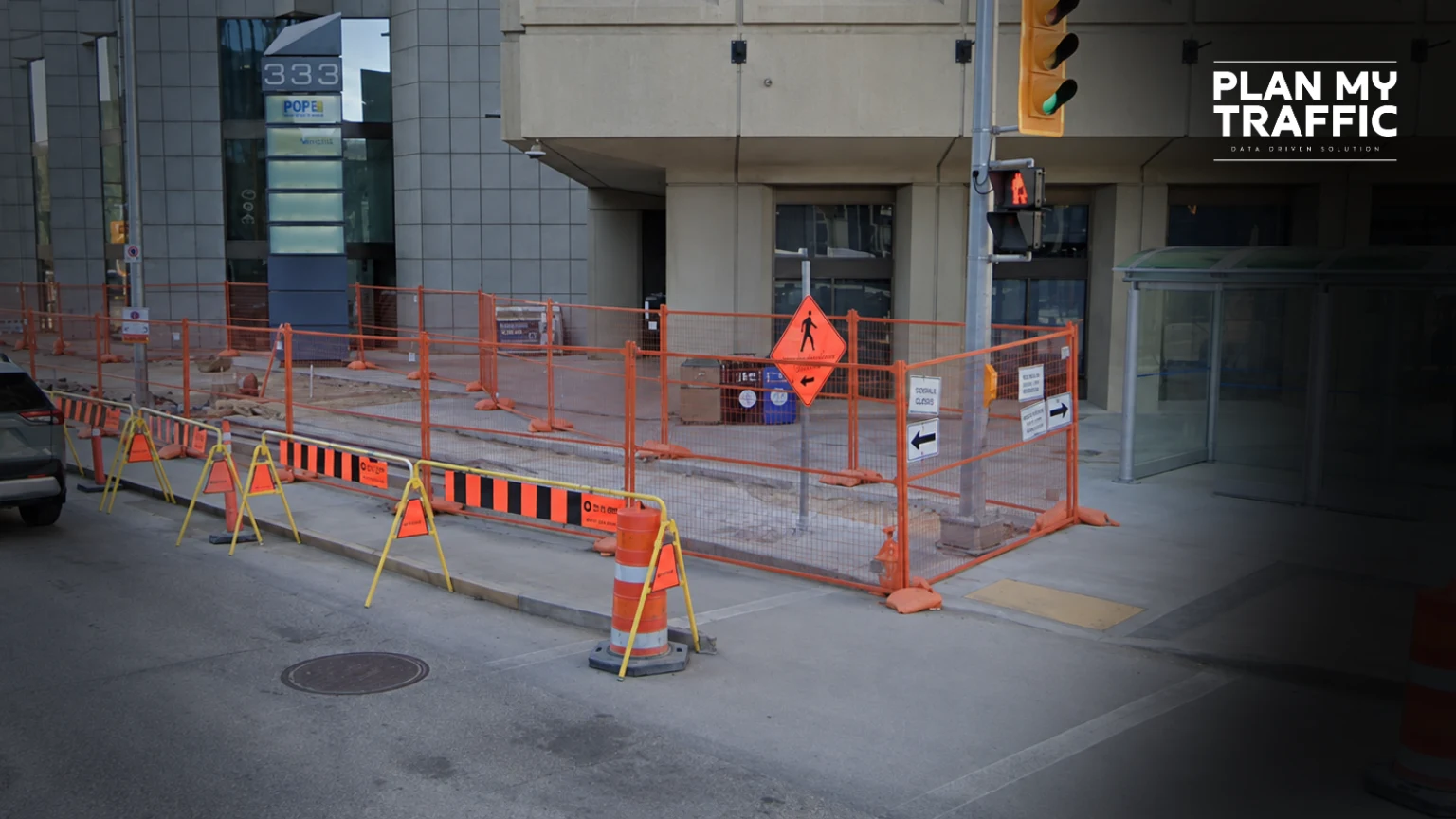
Understanding City of Winnipeg requirements for a Traffic Control Plan is essential for any construction, utility, maintenance, or infrastructure project that may affect public roads, sidewalks, bike routes, transit access, or pedestrian movement. Contractors must ensure the plan clearly shows the work zone, lane or sidewalk closures, signage, barricades, pedestrian routes, emergency access, project timelines, and any site-specific conditions that could impact traffic flow or public safety. A well-prepared Traffic Control Plan helps reviewers understand how the project will be managed in real conditions, reduces the risk of missing information, and helps prevent delays caused by revisions or rejected submissions.
The High Cost of Rejected Traffic Control Plan Submissions
A rejected traffic control plan submission to the City of Winnipeg is more than just a minor inconvenience; it can create substantial financial and logistical pressure. Contractors and project managers often face tight deadlines, and each rejection pushes back project completion, incurring additional labour costs, equipment rental fees, and potential penalties for missed milestones.
A common scenario involves a road closure permit being denied because the submitted traffic control plan lacks specific detail on pedestrian accommodation or does not clearly illustrate emergency vehicle access, as mandated by the City of Winnipeg’s operational guidelines. Such an error can force a complete redesign, delaying project commencement by weeks. Furthermore, repeated rejections can strain relationships with municipal authorities, making future approvals more challenging. Without an approved plan, work cannot proceed, leading to idle crews and stalled progress, directly impacting profitability and company reputation.
Key Steps in the Winnipeg Traffic Control Plan Approval Process
Successfully obtaining approval for a Traffic Control Plan in Winnipeg requires a structured approach that covers both the technical layout and the supporting project details. Contractors and project managers need more than a basic drawing; the submission should clearly explain how the work zone will operate, how road users will move safely around it, and how the project will reduce disruption to traffic, pedestrians, cyclists, transit users, and nearby properties.
The approval process usually becomes slower when the submitted plan is incomplete, too generic, or missing site-specific details. A strong submission should show the exact work location, closure limits, traffic control devices, pedestrian routes, access points, emergency access, and the expected duration of work. Each step should help the reviewer quickly understand the project impact and confirm whether the proposed setup is practical for the site.
To reduce the risk of delays or resubmission, contractors should follow a clear process before sending the plan for review:
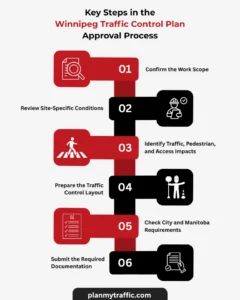
1. Confirm the Work Scope
Start by identifying exactly what work is being performed, where it will happen, and how long it is expected to last. This includes the project address, affected streets, work hours, staging areas, and whether the work will impact lanes, sidewalks, shoulders, bike routes, parking lanes, driveways, or public access points.
A clear scope helps prevent confusion during review and ensures the traffic control plan is designed around the actual project conditions.
2. Review Site-Specific Conditions
Every Winnipeg work zone has different risks and access requirements. Before preparing the plan, review the surrounding road layout, speed limits, intersections, pedestrian crossings, transit stops, school zones, bike facilities, driveways, and nearby businesses.
This step is important because a generic traffic control layout may not address the real conditions on site. For example, work near a school, hospital, major intersection, or transit stop may require additional planning to protect road users and maintain access.
3. Identify Traffic, Pedestrian, and Access Impacts
The plan should clearly show how the project affects vehicles, pedestrians, cyclists, transit users, emergency services, and nearby properties. If a sidewalk, lane, driveway, loading area, or bus stop is affected, the plan should explain how access will be maintained or safely redirected.
This is one of the most important parts of the approval process because many delays happen when the reviewer cannot clearly see how people will move around the work zone.
4. Prepare the Traffic Control Layout
Once the site conditions and impacts are understood, prepare the traffic control layout. The drawing should show signs, cones, barricades, barriers, tapers, flagging points, work vehicles, staging areas, detours, and pedestrian accommodations where required.
The layout should be easy for both the reviewer and field crew to understand. A good plan does not only support approval; it also helps crews set up the work zone correctly on site.
5. Check City and Manitoba Requirements
Before submission, review the plan against City of Winnipeg expectations and applicable Manitoba work-zone traffic control standards. This includes checking signage, device placement, taper areas, lane closure details, pedestrian routes, emergency access, and any project-specific requirements.
This step helps reduce the risk of reviewer comments, plan revisions, or delays caused by missing compliance details.
6. Submit the Required Documentation
After the traffic control plan is prepared and reviewed internally, submit it with the required project information and supporting documents. The submission should be complete, clear, and consistent with the actual site conditions.
A well-organized submission makes it easier for reviewers to assess the plan and reduces the chance of follow-up questions caused by missing information.
A quick and accurate response helps keep the approval process moving and reduces the risk of delaying crews, equipment, or project start dates.
Following these steps helps contractors create a more complete and approval-ready Traffic Control Plan. It also reduces avoidable back-and-forth, improves communication with reviewers, and gives field teams a clearer plan to follow when work begins.
Common Pitfalls Leading to Traffic Control Plan Rejection
Contractors often face significant project setbacks due to errors in their traffic control plan submissions. These errors typically stem from a lack of detailed understanding of municipal expectations, insufficient site analysis, or underestimation of the review process complexities. Identifying and avoiding these common pitfalls is crucial for ensuring a smooth approval trajectory and preventing unnecessary delays and cost overruns. A proactive approach to plan development, coupled with an awareness of frequently encountered issues, can significantly improve the likelihood of first-time approval and maintain project momentum.
1. Missing Site-Specific Details
One of the most common reasons for Traffic Control Plan rejection is submitting a generic layout that does not reflect the actual Winnipeg project site. The plan should clearly show the road layout, intersections, sidewalks, driveways, transit stops, bike routes, and nearby access points. If the reviewer cannot understand the real site conditions, the plan is more likely to require revisions.
2. Incomplete Pedestrian and Accessibility Planning
Traffic Control Plans often get delayed when pedestrian movement is not clearly addressed. If a sidewalk, crossing, or pedestrian route is affected, the plan should show how people will safely move around the work zone. This includes temporary walkways, detour routes, barricades, warning signs, and accessible pathways where required.
3. Incorrect or Unclear Signage and Device Placement
A plan may be rejected if traffic control signs, cones, barricades, barriers, or taper areas are missing, unclear, or incorrectly placed. Reviewers need to see how drivers will be warned in advance, how traffic will transition around the work area, and how the setup will protect workers and road users.
4. Failure to Address Emergency, Transit, or Property Access
Many submissions overlook important access needs. If emergency vehicles, transit routes, bus stops, driveways, loading areas, or business entrances are affected, the Traffic Control Plan should explain how access will be maintained or safely redirected. Missing these details can create serious review concerns and delay approval.
5. Submitting Incomplete or Inconsistent Documentation
Even if the drawing is mostly correct, missing project information can slow down the approval process. Common issues include unclear work dates, incomplete scope of work, mismatched details between the application and drawing, missing contact information, or unclear closure limits. A complete and consistent submission helps reviewers assess the plan faster and reduces the risk of resubmission.
Streamlining Your Traffic Control Plan Submissions with Professional Support
Engaging professional Traffic Control Plan consultants can significantly streamline the approval process, especially for complex construction, utility, and infrastructure projects in Winnipeg. Plan My Traffic offers a practical approach that combines expert traffic control design with a strong understanding of local municipal requirements, applicable Manitoba work-zone standards, and real project conditions.
Our team prepares detailed, site-specific, and approval-ready plans that anticipate common reviewer concerns before submission. This helps reduce the back-and-forth often caused by incomplete drawings, missing pedestrian details, unclear signage layouts, or insufficient access planning.
Our experience with projects across Winnipeg, from downtown work zones to suburban infrastructure upgrades, helps ensure your Traffic Control Plan is not only technically clear but also practical for field crews and aligned with municipal expectations. By using professional support, contractors can reduce resubmission risk, save administrative time, protect project schedules, and move forward with greater approval confidence.
The result is a clearer submission, a smoother review process, and a stronger traffic control plan that supports both safety and project efficiency from planning through execution.
Conclusion
Securing a fast Traffic Control Plan approval process in Winnipeg directly impacts your project’s profitability and schedule. Delays from non-compliant submissions or extended review times can halt your operations and increase costs significantly. By partnering with experienced traffic management professionals, contractors and project managers ensure their TCPs meet all City of Winnipeg requirements precisely. This proactive approach minimizes rejection risks, accelerates permit acquisition, and keeps your project moving forward without unnecessary interruptions. Choose expert support to safeguard your timelines and achieve operational certainty.
Frequently Asked Questions
1. What are the most common reasons for Traffic Control Plan rejections in Winnipeg?
Rejections often stem from non-compliance with the City of Winnipeg standards or insufficient detail. Common issues include incorrect signage placement, inadequate pedestrian management, missing permit information, or failure to address specific site conditions. These oversights lead to significant project delays.
2. What should be included in a Winnipeg Traffic Control Plan?
A Winnipeg Traffic Control Plan should include the project location, work scope, affected streets, work dates, lane or sidewalk closures, signage, cones, barricades, tapers, pedestrian routes, access points, emergency vehicle access, and any site-specific conditions that may affect public safety or traffic flow. The plan should be clear enough for both municipal reviewers and field crews to understand.
3. Is a Traffic Management Plan always required for construction projects in Winnipeg?
Any project impacting public roadways or pedestrian access in Winnipeg typically requires a Traffic Management Plan. This includes construction, utility work, or special events. Exemptions are rare and usually only for very minor, short-duration work not affecting traffic flow.
4. How can professional support help speed up the Traffic Control Plan approval process?
Professional Traffic Control Plan support helps contractors prepare clearer, more complete, and site-specific submissions before they are sent for review. This reduces the risk of missing information, unclear drawings, and repeated revisions. By working with experienced traffic planning consultants, contractors can save administrative time, protect project schedules, and move forward with greater confidence.