What Is a 24-Hour Traffic Management Plan?
A 24-hour traffic management plan is a site-specific document that outlines how traffic will be controlled, diverted, or managed around a work zone where construction or maintenance activities impact a roadway. In Vancouver, this is not optional paperwork. Under WorkSafeBC Part 18 and the BC Traffic Management Manual (TMM) 2020, any work that encroaches on a roadway requires a compliant plan before work begins.
-
-
Site plan and scale drawing showing the work zone, road layout, and adjacent infrastructure
-
Traffic control device layout detailing cones, barricades, delineators, and signs per TMM 2020 standards
-
Sign schedule with all regulatory and warning signs, distances, and mounting specifications
-
Traffic control personnel deployment including positioning, responsibilities, and communication protocols per WorkSafeBC Part 18
-
Speed reduction strategy documenting how posted limits will be reduced through the work zone
-
Emergency vehicle access plan ensuring unobstructed routes for fire, ambulance, and police
-
Contingency provisions for adverse weather, incidents, or schedule changes
-
Preparer credentials confirming the plan was prepared or reviewed by a certified designer, with a Professional Engineer (P.Eng.) stamp for complex sites
-
Why 24-Hour Plans Are Critical in Vancouver
-
-
Dense Population & Mixed-Use Areas: Downtown Vancouver, Yaletown, and the West End combine residential, commercial, and entertainment zones, meaning traffic flows change dramatically between 2 PM and 2 AM.
-
Major Transit Corridors: With SkyTrain lines, major bus routes, and active bike lanes running throughout the city, any disruption requires careful coordination with TransLink and the City of Vancouver.
-
Tourism & Event Traffic: From cruise ship arrivals at Canada Place to concerts at Rogers Arena and festivals in Stanley Park, Vancouver sees significant traffic fluctuations that 24-hour plans must accommodate.
-
Weather Variability: Vancouver’s rainy winters and occasional snow events demand traffic control measures that remain effective in low-visibility, wet conditions around the clock.
-
The Real Cost of Delays and Rejections
Submitting to the wrong authority. A contractor submitting a plan for work on a provincial highway to the City of Vancouver engineering department wastes days. Understanding whether the road falls under MoTT or City of Vancouver jurisdiction is critical.
Consider a mid-sized civil contractor in the Lower Mainland bidding on a utility upgrade for the City of Vancouver. The project involves a partial lane closure on a major arterial road for two weeks, with nightly full closures. Three days before the deadline, they reach out to a traffic plan consultant who quotes a 5-business-day turnaround. That is two days past the bid deadline. The contractor submits without the plan, noting it will be provided upon award. The City of Vancouver requires a complete package at submission. The bid is disqualified. The project goes to a competitor who had an established relationship with a traffic plan firm and submitted a full plan on day one. This is not an edge case. It happens regularly across Vancouver, particularly for projects managed by the City of Vancouver, City of Burnaby, and City of Richmond where procurement criteria are strict. The cost of that delay was not just the plan fee. It was the entire value of the contract.
Core Requirements for Vancouver Traffic Management Plans
The City of Vancouver requires that private contractors and utility companies meet traffic control standards set by the BC Ministry of Transportation and Transit. These standards ensure that construction activities do not compromise public safety or create hazardous conditions for motorists, cyclists, and pedestrians. To obtain the necessary permits for 24-Hour Traffic Management Plans, applicants must submit a comprehensive proposal that outlines the intended traffic control measures. This proposal should detail how the plan will minimize disruptions while adhering to the established safety protocols. Following review and approval by city officials, contractors can then proceed to implement the approved traffic management strategies, ensuring compliance with all regulations throughout the duration of the project.
Project Details and Construction Schedule
-
-
Project location and boundaries
-
Construction phases and duration
-
Contractor information and 24-hour contact details
-
Anticipated traffic generation (truck trips, worker vehicles)
-
The City of North Vancouver recommends submitting traffic management plans at least ten working days before construction begins to allow adequate review time.
Mobility Impact Assessment
-
-
Pedestrian accommodations: Maintaining accessible pathways and addressing safety concerns for foot traffic
-
Cyclist safety: Ensuring bicycle route continuity, particularly on designated cycling corridors
-
Transit impacts: Coordination with TransLink for any service disruptions
-
Emergency vehicle access: Maintaining clear routes for first responders
-
Truck routing: Designated haul routes that minimize community impact
-
The North Vancouver Bicycle Plan emphasizes that designated bicycle routes are critical infrastructure, and every effort must be made to allow safe passage through construction zones. This priority reflects broader Vancouver regional transportation planning principles.
Work Zone Traffic Control
-
-
Signage types and placement (including advance warning signs)
-
Traffic control personnel requirements and certifications
-
Barrier and delineation device specifications
-
Lighting requirements for nighttime work
-
Lane width maintenance (minimum 12 feet unless specifically approved otherwise)
-
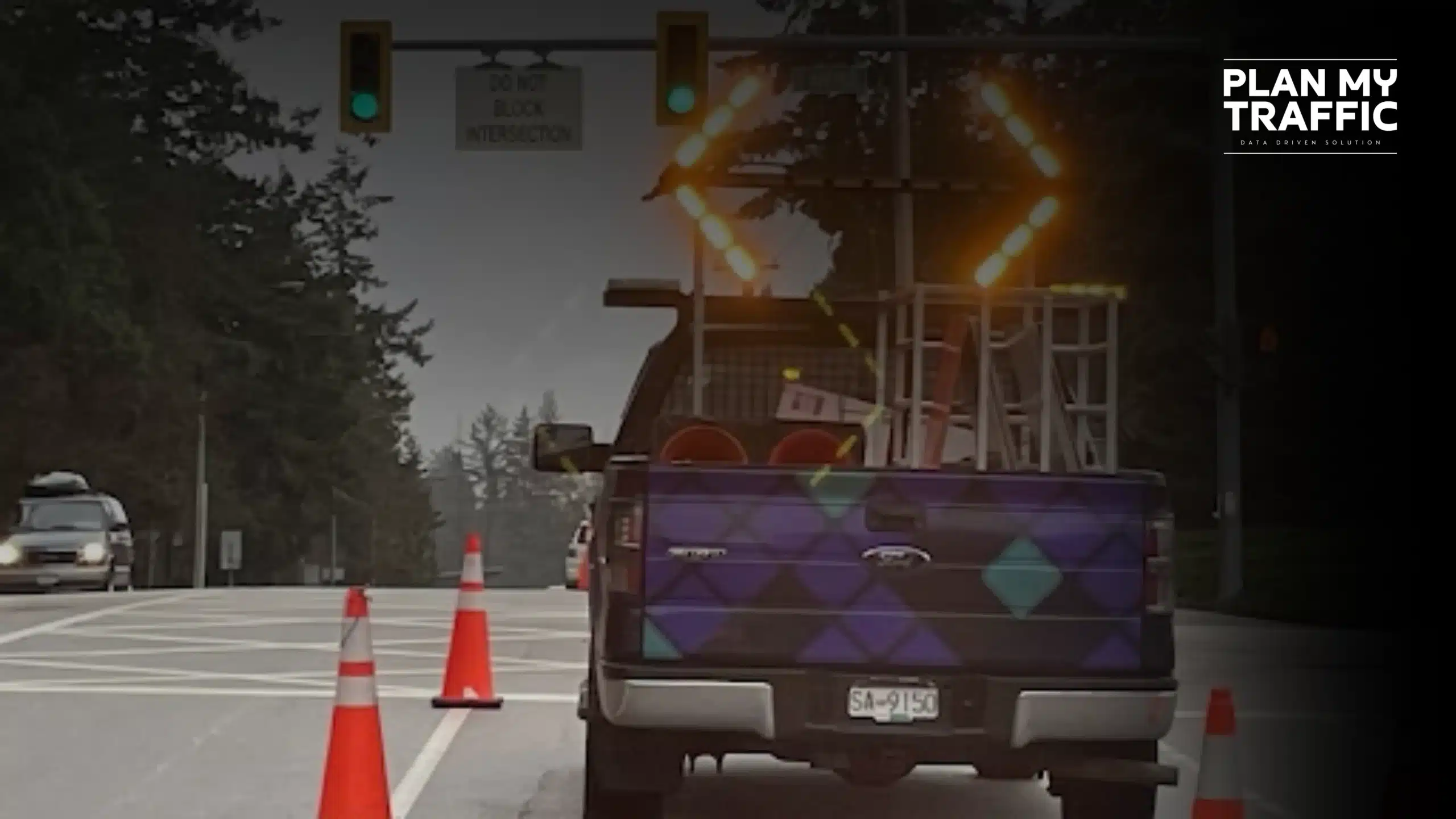
For projects on arterial streets, the City of Vancouver requires Type B arrow boards for any lane closures.
Common Mistakes That Delay Approval
-
-
Using a generic or recycled plan without modification: Every site is different. Reviewers will spot a recycled plan immediately.
-
-
-
Not accounting for adjacent businesses or access points: Vancouver municipalities increasingly require documented provisions for driveway access and business disruption notifications, especially for closures exceeding 4 hour.
-
Inadequate detour route documentation: For any full closure, a detour route needs to be drawn, signed, and approved.
-
Missing or expired preparer credentials: An expired certification kills the submission.
-
-
-
Submitting a plan that does not match the permit application: When the permit describes a 2-week partial closure but the plan shows full nightly closures, approvers flag the discrepancy and send everything back.
-
How to Get a 24-Hour Traffic Management Plans in Vancouver
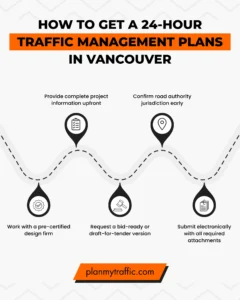
Step 2: Confirm road authority jurisdiction early: Is this a provincial highway under MoTT? A City of Vancouver street? The answer determines which standards apply and who receives the submission.
Step 3: Work with a pre-certified design firm: Firms that regularly work with MoTT regional offices and Vancouver municipalities understand local reviewer expectations. This familiarity dramatically reduces the chance of first-pass rejection.
Step 4: Request a bid-ready or draft-for-tender version: Some jurisdictions allow a preliminary plan concept to be included with the bid, with a final stamped plan required prior to mobilization. Know what your tender package requires.
Step 5: Submit electronically with all required attachments: The City of Vancouver’s ePlans system enables electronic plan submission, review tracking, and revision management. Sending a complete package the first time is essential for meeting 24-hour turnarounds.
MoTT vs. City of Vancouver Approval Process
MoTT (Ministry of Transportation and Transit) manages provincial highways including major routes like Highway 1, Highway 99, and Highway 97. Submissions must comply with the BC Traffic Management Manual 2020, meet regional district requirements, and include a P.Eng. stamp for complex work zones. Routine plans can often be processed within 1 to 3 business days when submitted correctly.
-
Some projects require pre-approval meetings or site walkthroughs for complex closures
-
Utility work permits may have additional traffic management plan requirements
-
Approval timelines range from same-day for routine configurations to 5 or more business days for complex or high-impact closures
Knowing which authority you are dealing with before you start saves significant time. Submitting to the wrong desk can cost you 24 to 48 hours that you do not have.
Practical Steps to Maintain Fast Approval Cycles
For repeat projects, establish pre-approved standard configurations: Some Vancouver road authorities will pre-approve standard templates for routine work types. Working with the authority to establish these ahead of time creates a fast-track pathway for future projects.
Conclusion
A 24-hour traffic management plan is your competitive edge in Vancouver’s bidding environment without it, you lose contracts before work even begins. Speed, accuracy, and jurisdiction awareness separate winning contractors from those scrambling at deadlines. Partner with certified local designers, know your MoTT versus City authority upfront, and treat traffic planning as a core workflow step, not an afterthought. In a market where complete, stamped plans determine bid success, investing in fast, compliant 24-hour turnaround isn’t an expense, it’s revenue protection.
Stop losing bids over missing traffic plans. PlanMyTraffic delivers Vancouver-compliant, site-specific 24-Hour Traffic Management Plan across MoTT and municipal jurisdictions with permit-ready delivery in 24 hours.
Frequently Asked Questions
Yes. Under WorkSafeBC Part 18, any work that encroaches on a roadway requires a traffic management plan. This applies regardless of project size or duration, though complexity varies by road type and traffic volume.
Preparers must meet certification requirements set by the road authority. WorkSafeBC recognizes certified Traffic Control Supervisors for standard work zones. For complex closures on provincial highways or major arterials, a Professional Engineer stamp may be required.
MoTT manages provincial highways and applies the BC Traffic Management Manual 2020 as the primary standard. The City of Vancouver manages city streets and often has supplementary requirements. Submission processes, timelines, and specific standards vary between jurisdictions.
It depends on the tender requirements. Some Vancouver municipalities and MoTT projects accept a draft-for-tender concept, with a final stamped plan required as a condition of award. Others require a complete, stamped plan at submission. Always read the tender documents carefully.