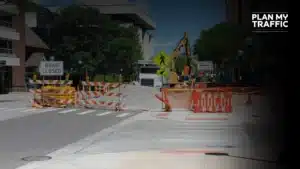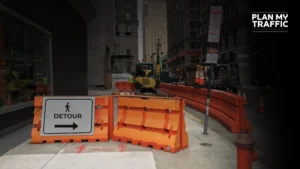
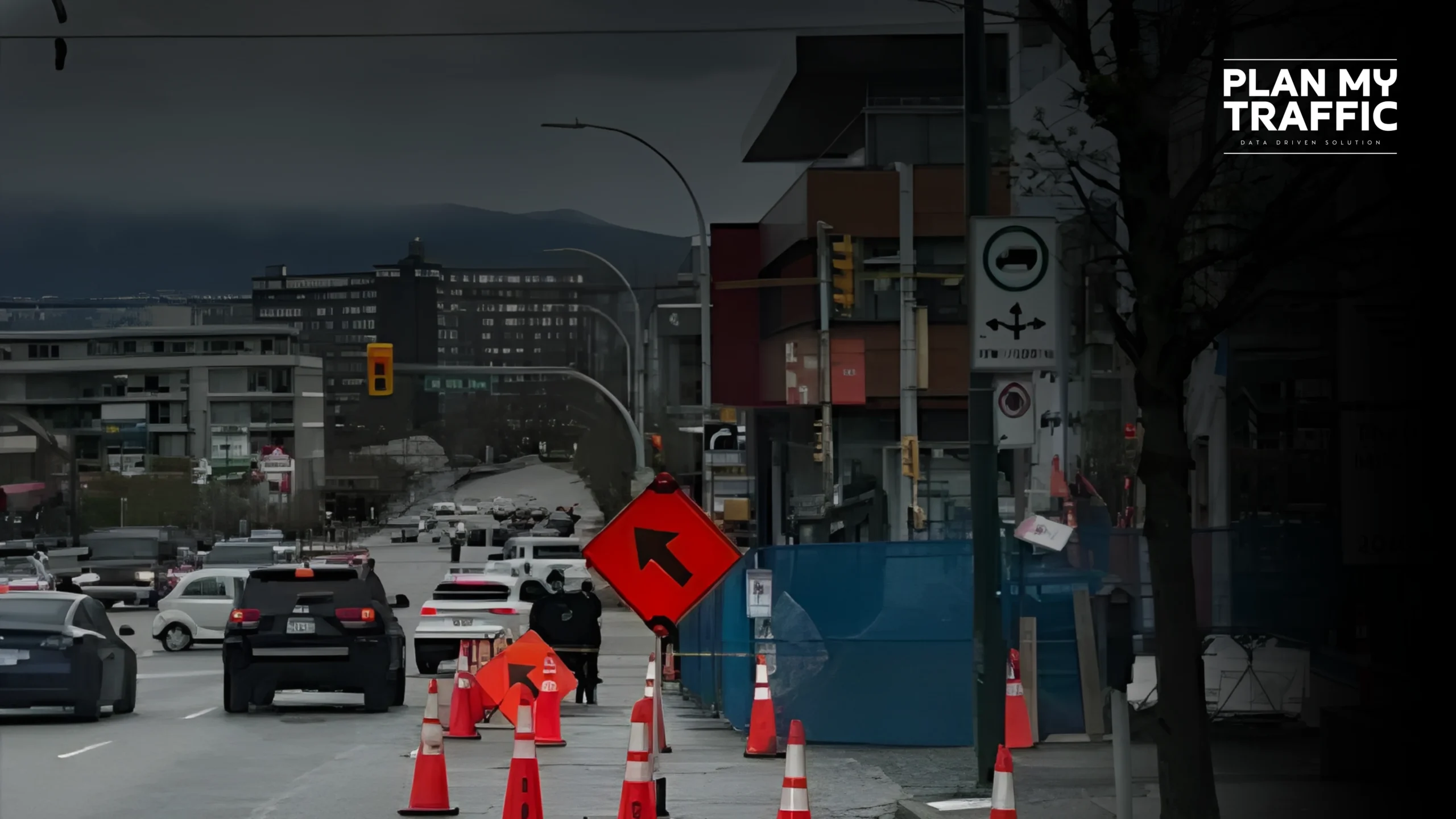
Planning a construction or utility project on Burnaby’s roads? The cost of traffic control permit in Burnaby is one of the most overlooked line items in a project budget until it causes a delay or a surprise invoice. Whether you’re a contractor, developer, or utility operator, understanding exactly what drives these costs puts you in control of your timeline and your bottom line.
This guide covers everything you need to know: the difference between a TCP and a TMP, how Burnaby’s three project categories affect what you pay, and the key factors that determine your total traffic control permit cost before you submit a single document.
What Is a Traffic Control Permit and Why Does It Cost What It Does?
In Burnaby, any project that temporarily closes a lane, sidewalk, bike path, or laneway on a public road requires a Traffic Control Permit from the City. The permit ensures that pedestrians, cyclists, transit users, and drivers can navigate safely around your work zone throughout the project.
The cost of a traffic control permit in Burnaby is not a flat fee. It is calculated based on the type of infrastructure you impact, the road classification, and how long your project runs. Understanding this structure before you apply is what separates projects that stay on budget from those that don’t.
TCP vs. TMP: Which One Does Your Project Need?
Two documents sit at the center of every Burnaby road permit application and confusing them is one of the most common reasons submissions get rejected.
Traffic Control Plan (TCP)
A Traffic Control Plan is a site-specific document that defines exactly how traffic will be physically managed around your work zone. It includes signage placement, lane closure configurations, detour routes, pedestrian accommodations, and flagging arrangements. Every project requires a TCP this is non-negotiable regardless of project size or category.
Traffic Management Plan (TMP)
A Traffic Management Plan is a broader, strategic document required for moderate to high-risk projects. It wraps the TCP inside a larger framework that addresses the full lifecycle of traffic impact. A complete TMP includes four mandatory sub-plans:
-
- Public Information Plan — how you will notify affected residents, businesses, cyclists, and transit users before and during construction
- Incident Management Plan — step-by-step procedures for handling accidents or emergencies within the work zone
- Implementation Plan — a phased schedule showing how traffic control measures will be deployed as the project progresses
- Monitoring and Compliance Plan — ongoing checks to confirm your approved setup remains in place throughout the permit period
Category 2 and Category 3 projects require both a TCP and a full TMP. Submitting only a TCP for a project that requires a TMP will result in rejection and a full restart of the 15-business-day review clock costing you weeks before work even begins.
Don’t let a rejected submission cost you 3+ weeks. Get your TCP and TMP prepared by experts who know Burnaby’s exact requirements and get it right the first time.
Get a Permit-Ready TCP/TMP
Project Categories: How Burnaby Classifies Your Work
The City of Burnaby uses BC’s Ministry of Transportation and Transit 2020 Traffic Management Manual for Work on Roadways (TMM) to classify every project. Your category is the single biggest variable in the cost of your traffic control permit, it determines your application fee, required documentation, engineering credentials, and insurance thresholds.
Category 1 – Low Risk, Minimal Traffic Impact
Typical projects: Short-duration work on local roads, minor utility maintenance, off-peak excavations on low-volume streets with no sidewalk or cycling facility impacts.
What you need to submit:
-
- Basic TCP drawings
- Standard application fee
- Proof of insurance and WorkSafeBC clearance
What you do not need: A full TMP, sub-plans, or professionally sealed engineering drawings.
Permit cost range: A one-week local road lane closure runs $345/week. Application fees are at the base rate the most affordable tier.
Watch out for: Underestimating your project’s impact. If City staff determine your project is actually Category 2 or 3 after submission, you will be invoiced the fee difference and your submission restarts. Getting a professional category assessment before you apply eliminates this risk entirely.
Category 2 – Moderate Risk, Professional Engineering Required
Typical projects: Work on arterial or collector roads, projects involving sidewalk or cycling facility closures, multi-phase utility work, any project requiring a formal detour route.
What you need to submit:
-
- TCP drawings signed and sealed by a P.Eng.
- Full TMP including all four sub-plans
- Commercial General Liability: minimum $5 million per occurrence
- Automobile Liability: minimum $3 million
- Professional Errors & Omissions: minimum $1 million per occurrence / $2 million annual aggregate
- WorkSafeBC clearance letter
Weekly traffic control permit costs (≤6 months):
| Infrastructure Impacted | Arterial/Collector Road | Local Road |
| Per travel/parking lane | $695/week | $345/week |
| Per sidewalk | $415/week | $205/week |
| Per cycling facility | $415/week | $205/week |
| Combined ped/cycling facility | $415/week | $205/week |
| Traffic change only | $280/week | $140/week |
One revision cycle from an incomplete TMP submission delays your project by 3+ weeks and may affect contractor availability and downstream scheduling costs. Hire a consultant who knows Burnaby’s submission requirements the first time.
Category 3 – High Risk, Major Traffic Disruption
Typical projects: Major construction on arterial corridors, long-term multi-lane closures, projects affecting SkyTrain bus routes or major transit corridors, simultaneous closure of multiple infrastructure elements, or any project the City determines has a significant network-level impact.
What you need to submit: Everything required for Category 2, plus:
-
- Comprehensive, multi-phase TMP covering all construction phases
- Enhanced public notification including direct community and business outreach
- TransLink coordination if transit routes are affected
- More detailed incident management and compliance monitoring
- Higher City scrutiny at every review stage
Weekly traffic control permit costs (>6 months):
| Infrastructure Impacted | Arterial/Collector Road | Local Road |
| Per travel/parking lane | $730/week | $365/week |
| Per sidewalk | $440/week | $220/week |
| Per cycling facility | $440/week | $220/week |
| Combined ped/cycling facility | $440/week | $220/week |
| Per laneway | N/A | $185/week |
| Traffic change only | $295/week | $150/week |
Do not attempt a Category 3 submission without an experienced traffic management firm. Incomplete submissions are not revised by the City they are rejected, and the review clock restarts.
Not sure if your project is Category 1, 2, or 3? A wrong classification means a fee difference invoice and a full restart. Get a professional category assessment before you submit.
Get Your Category Assessment
Key TMP Factors That Drive Your Total Permit Cost
If your project requires a TMP, these are the factors that will most significantly affect what you pay beyond the base permit fees:
Road Classification: Arterial and collector road permits cost approximately double local road permit fees. Minimizing arterial impact through project phasing or off-peak scheduling is the most effective single cost reduction lever available to you.
Number of Infrastructure Elements: Every element you close travel lane, parking lane, sidewalk, cycling facility, combined pedestrian/cycling path, laneway is a separate weekly fee. Closing three elements means paying for all three, every week.
Project Duration and the 6-Month Threshold: Projects running beyond six months face an approximately 5% fee increase across all infrastructure types. There are also no refunds for unused permit time accurate scheduling before submission is essential.
Sub-Plan Complexity: A straightforward Public Information Plan for a local road project is fundamentally different from one required for a project affecting a major transit corridor. More complex sub-plans mean more consultant hours, more drawing revisions, and more potential rejection points.
Detour Route Requirements: If your TMP requires a formal detour route, engineering complexity increases significantly route capacity analysis, signage placement, coordination with adjacent permit holders, and potential impacts on neighbouring projects all add scope and cost.
Insurance Premiums: Burnaby’s insurance thresholds particularly the $5M CGL requirement represent real premium costs, especially for smaller contractors. These belong in your total cost of traffic control permit budget, not as an afterthought.
Seasonal Factors: Winter work in BC typically requires enhanced lighting, additional safety measures, and more frequent plan adjustments, all of which can extend project duration and increase total weekly permit fees.
Public Notification Scope: Category 3 projects may require direct community notification letters, business impact assessments, and ongoing communications updates throughout construction. These are billable hours and print costs that should be itemized in your budget.
Complete Application Checklist
To avoid rejection and keep your review clock running, your submission must include all of the following:
-
- Project category assessment and risk analysis
- TCP drawings
- Full TMP with all four required sub-plans
- Commercial general liability insurance proof
- WorkSafeBC clearance letter
- Traffic Control Permit certificate of insurance form
All applications are submitted through Burnaby’s My Permits Portal. The City requires a minimum of 15 business days for review after all documents are received. Submit early and submit complete.
5 Proven Ways to Reduce Your Traffic Control Permit Cost in Burnaby
-
- Get professionally categorized before you apply: A category upgrade after submission means a fee differential invoice and a clock restart. Know your category before day one.
- Minimize arterial exposure: Phasing work to reduce arterial road impact or scheduling it during lower-volume windows is the most direct way to lower weekly fees.
- Consolidate work phases: Fewer weeks impacting more elements is frequently cheaper than spreading closures across more weeks. Model your sequencing before you estimate permit costs.
- Hire consultants with Burnaby-specific experience: Firms that know the TMM and Burnaby’s portal requirements get approvals on first submission. The premium for experienced help is almost always less than one revision cycle.
- Schedule accurately no refunds exist: Overestimate your duration and you pay for weeks you don’t use. Underestimate and you face permit extensions with contractors on standby. Precision here directly controls your traffic control permit cost.
Conclusion
The cost of a traffic control permit in Burnaby is determined by a specific, calculable combination of factors: your project category, the road classification, the number of infrastructure elements impacted, project duration, TMP complexity, professional fees, and insurance requirements. With arterial road closures running up to $730/week for long-term projects and TMP preparation adding professional consulting costs on top, accurate budgeting from day one is what keeps projects on schedule and on budget. The contractors and developers who manage these costs most effectively are the ones who get their category right before submitting, hire professionals who know Burnaby’s standards, and build every cost variable permits, TMP preparation, insurance, equipment, and labor into their project budget from the start. If you are planning a road-impacting project in Burnaby and want to understand your exact permit cost before you apply, get your category assessment and professional consultation scheduled now before the 15-business-day clock becomes your problem. For the most current fee schedule and application procedures, always verify on the City of Burnaby’s official Traffic Control Permit page.
Stop guessing your permit cost. Tell us about your project and get a clear quote, the right category, and a compliant plan before a single document is rejected.
Request a Quote
Ready to Work Together? Build a project with us!
FAQs
1. How long does Burnaby’s review take?
A minimum of 15 business days after all required documents are received. Incomplete submissions restart the clock plan for 3 to 4 weeks minimum when scheduling your project start date.
2. Can I get a refund if my project wraps up early?
No. Burnaby does not issue refunds for unused permit time. Accurate scheduling before application is the only way to avoid overpaying.
3. What happens if my site setup doesn’t match the approved plan?
Non-compliance can result in formal warnings, tickets, fines, or permit cancellation requiring immediate site clearance all of which cost significantly more than maintaining a compliant setup.
4. Does crossing the 6-month mark significantly change my permit cost?
Yes, approximately 5% higher weekly rates apply across all infrastructure types once you exceed six months. An arterial lane closure jumps from $695/week to $730/week. On a long-duration project, that compounds quickly.