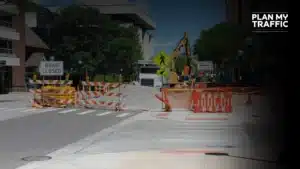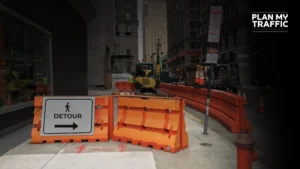
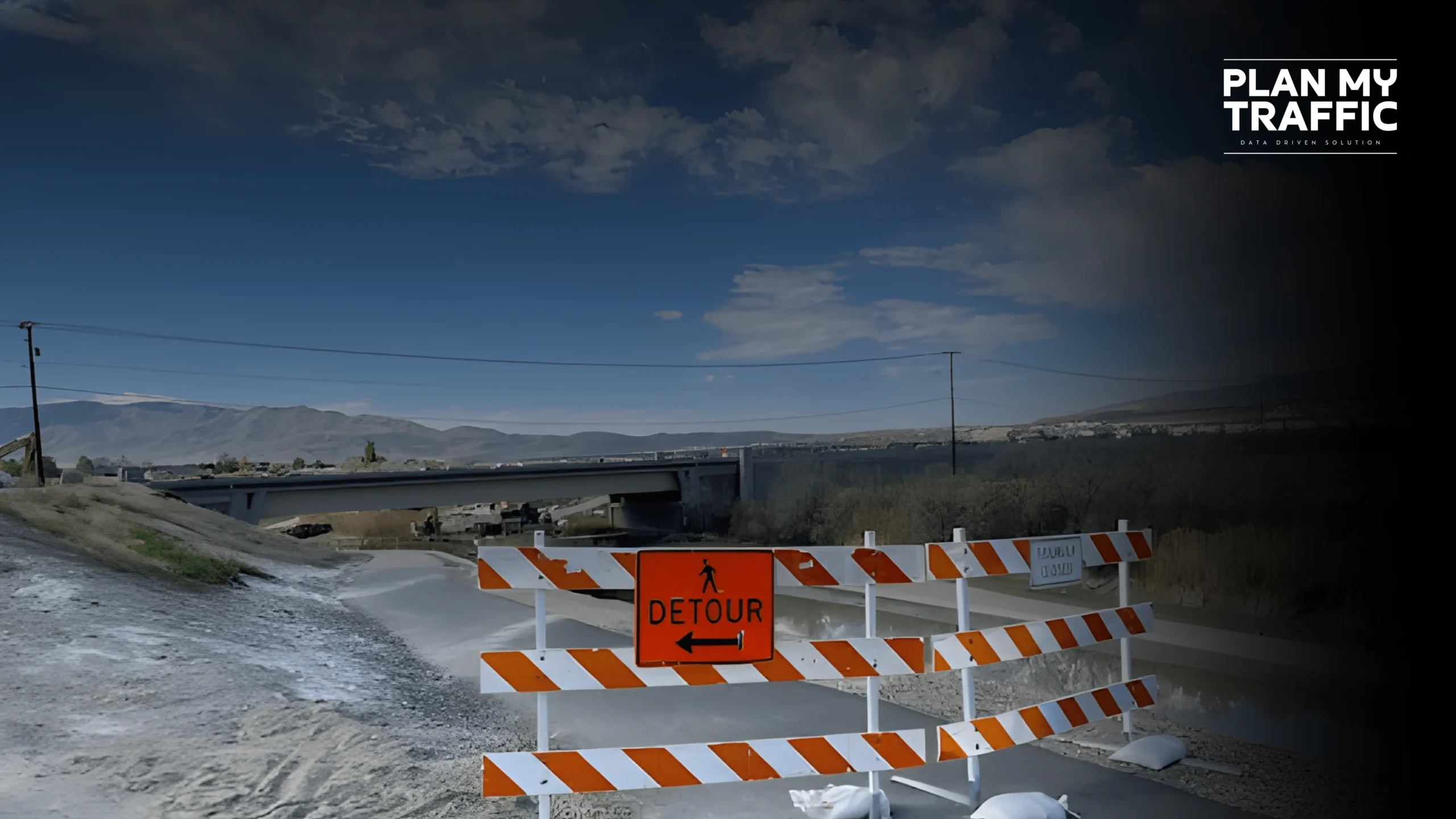
If you’re managing a construction project, roadwork, or any activity that impacts public walkways in Burnaby, understanding when and why you need a Pedestrian Traffic Control Plan is critical. Submit an incomplete or non-compliant plan, and you risk costly delays, project shutdowns, or outright rejection by the City of Burnaby. This guide provides everything contractors, developers, and project managers need to know to ensure compliance, streamline approvals, and keep pedestrians safe.
What Is a Pedestrian Traffic Control Plan?
A Pedestrian Traffic Control Plan is a formal document that outlines how pedestrian movement will be managed safely around construction zones, road closures, or any work that encroaches on sidewalks, crosswalks, or public pathways. In Burnaby, this plan is a mandatory component of your overall Traffic Management Plan (TMP) whenever your project affects pedestrian infrastructure.
Unlike general traffic control, which focuses on vehicle flow, a Pedestrian Traffic Control Plan specifically addresses:
-
-
Safe pedestrian detours and alternate routes
-
Accessibility compliance for people with disabilities
-
Temporary pedestrian facilities (sidewalks, curb ramps, barriers)
-
Signage and wayfinding for pedestrians
-
Protection from construction hazards
-
The City of Burnaby takes pedestrian safety seriously, particularly given British Columbia’s commitment to Vision Zero principles eliminating all traffic-related fatalities and serious injuries.
When Is a Pedestrian Traffic Control Plan Required in Burnaby?
Not every project requires a formal Pedestrian Traffic Control Plan, but many do. Understanding the triggers will save you from compliance headaches down the road.
Mandatory Scenarios
You must submit a Pedestrian Traffic Control Plan when your project involves:
1. Sidewalk Closures or Partial Closures
Any work that requires shutting down a sidewalk, even temporarily, demands a comprehensive Plan. This includes utility work, building construction, road resurfacing, or tree maintenance that blocks pedestrian access.
Any work that requires shutting down a sidewalk, even temporarily, demands a comprehensive Plan. This includes utility work, building construction, road resurfacing, or tree maintenance that blocks pedestrian access.
2. Encroachment on Pedestrian Right-of-Way
If construction materials, equipment, scaffolding, or debris storage extends into sidewalks or pathways, you need a plan demonstrating how pedestrians will navigate safely around these obstructions.
If construction materials, equipment, scaffolding, or debris storage extends into sidewalks or pathways, you need a plan demonstrating how pedestrians will navigate safely around these obstructions.
3. Crosswalk Modifications
Projects affecting marked or unmarked crosswalks whether temporary removal, relocation, or signal modifications require detailed pedestrian management strategies.
Projects affecting marked or unmarked crosswalks whether temporary removal, relocation, or signal modifications require detailed pedestrian management strategies.
4. Work Near Transit Stops
Construction activity around bus stops, SkyTrain stations, or transit exchanges in Burnaby necessitates plans that coordinate with TransLink requirements and ensure continuous accessible transit access.
Construction activity around bus stops, SkyTrain stations, or transit exchanges in Burnaby necessitates plans that coordinate with TransLink requirements and ensure continuous accessible transit access.
5. Special Events and Temporary Activities
Parades, festivals, filming, or large-scale private events that disrupt normal pedestrian patterns must include pedestrian management in their event traffic plans.
Parades, festivals, filming, or large-scale private events that disrupt normal pedestrian patterns must include pedestrian management in their event traffic plans.
6. Multi-Phase Construction Projects
Long-term developments with evolving site conditions need updated Pedestrian Traffic Control Plan for each phase to address changing pedestrian impacts.
Long-term developments with evolving site conditions need updated Pedestrian Traffic Control Plan for each phase to address changing pedestrian impacts.
Not sure if your Pedestrian Traffic Control Plan meets Burnaby requirements? Get it reviewed before submission and avoid costly delays or rejection.
Key Components of an Approved Pedestrian Traffic Control Plan
A rejected Pedestrian Traffic Control Plan typically fails on one or more critical elements. Ensure your submission includes:
1. Site-Specific Analysis
Generic templates won’t pass scrutiny. Your plan must demonstrate intimate knowledge of the site, including:
-
-
Existing pedestrian volumes and patterns
-
Proximity to schools, seniors’ facilities, hospitals, or transit hubs
-
Surrounding land uses that generate pedestrian activity
-
Topography and sightline challenges
-
2. Accessible Detour Design
Burnaby adheres strictly to the BC Building Code and CSA standards for accessibility. Your detour must accommodate:
-
-
Wheelchair users and mobility devices
-
Visually impaired pedestrians
-
Parents with strollers
-
Seniors with limited mobility
-
Temporary pathways must maintain minimum widths (typically 1.5m), proper gradients, and detectable warning surfaces at transitions.
3. Clear Signage and Wayfinding
Confused pedestrians create safety hazards. Your Plan should specify:
-
-
Advance notification signage before detours begin
-
Clear, consistent directional signage throughout the route
-
Illumination for night time visibility
-
Multilingual considerations in diverse neighbourhoods’
-
4. Physical Protection Measures
Pedestrians must be physically separated from construction hazards. Include details on:
-
-
Type 3 barricades or concrete barriers between walkways and work zones
-
Overhead protection where falling objects are possible
-
Stable walking surfaces free from mud, ice, or tripping hazards
-
Covered walkways during inclement weather for extended projects
-
5. Emergency Access and Egress
Your plan must never block building exits, fire hydrants, or emergency vehicle access routes. Identify how emergency responders can access properties adjacent to your work zone.
6. Monitoring and Maintenance Protocols
Static plans fail when conditions change. Include procedures for:
-
-
Daily inspections of pedestrian facilities
-
Rapid response to repair damaged barriers or signage
-
Winter maintenance (snow removal, de-icing)
-
Contact information for 24/7 emergency adjustments
-
Common Reasons for Pedestrian Traffic Control Plan Rejection in Burnaby
Understanding why plans get rejected helps you avoid the same pitfalls. The City of Burnaby’s Engineering Department frequently returns Pedestrian Traffic Control Plan for these reasons:
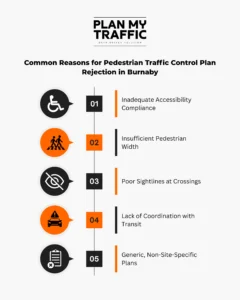
Inadequate Accessibility Compliance
The most common rejection reason. Plans that fail to provide fully accessible detours or that propose “reasonable alternative” routes that add significant distance for disabled pedestrians will not be approved. Burnaby’s commitment to universal access means temporary facilities must match permanent infrastructure standards.
Insufficient Pedestrian Width
Proposing walkways narrower than 1.5 meters will trigger rejection, particularly in high-volume areas like Metrotown, Brentwood, or Lougheed Town Centre.
Poor Sightlines at Crossings
Detours that position pedestrians at intersections with limited visibility of turning vehicles, or that create blind corners, present unacceptable safety risks.
Lack of Coordination with Transit
Failing to address impacts on bus stops, transit shelters, or passenger loading zones will delay approval. TransLink coordination is essential when transit services are affected.
Generic, Non-Site-Specific Plans
Using boilerplate plans from other municipalities or previous projects without customizing for Burnaby’s specific conditions demonstrates insufficient preparation.
How to Ensure Your Pedestrian Traffic Control Plan Gets Approved
Follow these best practices to streamline the approval process and avoid costly revisions:
Engage Early with City Staff
Pre-application meetings with Burnaby’s Engineering Department can identify potential issues before you invest heavily in plan preparation. This consultation is invaluable for complex projects or high-pedestrian-volume locations.
Hire Qualified Professionals
While not always mandatory, having your Pedestrian Traffic Control Plan prepared by a qualified traffic engineer or certified traffic control professional signals seriousness and technical competence. Professional designations like P.Eng. or Certified Traffic Control Person (CTCP) add credibility.
Conduct Pedestrian Counts
Data strengthens your plan. Conduct pedestrian volume counts during peak periods to justify your facility sizing and demonstrate understanding of actual usage patterns.
Consult Accessibility Guidelines
Review the BC Ministry of Transportation’s “Pedestrian Traffic Control Guidelines“ and Transportation Association of Canada (TAC) manuals to ensure your plan meets or exceeds standards.
Include Detailed Drawings
Schematic sketches are insufficient. Provide scaled drawings showing:
-
-
Existing sidewalk widths and locations
-
Proposed temporary walkway alignments
-
Barrier placements and types
-
Signage locations and specifications
-
Cross-section views showing pedestrian clear zones
-
Plan for the Worst Weather
Burnaby’s rainy season lasts eight months. Your Pedestrian Traffic Control Plan must demonstrate how pedestrian routes remain safe and accessible during heavy rain, wind, and occasional snow.
Build in Flexibility
Conditions change. Include contingency plans for unexpected utility conflicts, emergency vehicle access needs, or higher-than-anticipated pedestrian volumes.
A single mistake in your Pedestrian Traffic Control Plan can delay your project by weeks. Let experts ensure your plan is fully compliant and approval-ready.
The Approval Process: What to Expect
Understanding the timeline helps you plan accordingly:
Initial Submission: Submit your Pedestrian Traffic Control Plan through Burnaby’s Development Services or Engineering Department, depending on project type. Include all supporting drawings, insurance certificates, and fees.
Review Period: Standard review takes 2-4 weeks for straightforward projects. Complex developments or high-impact zones may require 6-8 weeks.
Revision Requests: Most plans require at least one round of revisions. Respond promptly and comprehensively to City feedback to avoid multiple review cycles.
Final Approval: Upon approval, you’ll receive formal authorization to implement your Pedestrian Traffic Control Plan. Display approved plans on-site and ensure all workers understand pedestrian protection requirements.
Inspections: Expect periodic City inspections to verify compliance with your approved plan. Non-compliance can result in penalties or work stoppages.
Conclusion
A Pedestrian Traffic Control Plan is not merely administrative paperwork it is a critical safety framework that protects both public safety and project viability. In Burnaby, where Vision Zero principles guide transportation planning, failing to submit a compliant Pedestrian Traffic Control Plan can result in costly permit delays, work stoppages, and potential liability exposure. The key to successful approval lies in early engagement, professional preparation, and uncompromising commitment to accessibility standards. Whether you’re managing a small utility repair or a multi-year development near Metrotown, understanding when pedestrian Traffic Control Plans are required and what makes them compliant separates projects that proceed on schedule from those mired in regulatory complications. By treating pedestrian safety as a design priority rather than a regulatory obstacle, developers and contractors position themselves for efficient approvals, positive community relations, and incident-free project delivery.
Even a small mistake in your Pedestrian Traffic Control Plan can delay your project and lead to rejection get a compliant, approval-ready plan before you submit.
Frequently Asked Questions (FAQs)
Q1: How long does Burnaby typically take to approve a Pedestrian Traffic Control Plan?
A: Burnaby typically takes 2 to 4 weeks to approve a Pedestrian Traffic Control Plan for standard projects with complete submissions. For complex sites or high pedestrian areas, the review may extend to 6–8 weeks. Delays usually occur when revisions are required, so accurate and detailed plans help speed up approval.
A: Burnaby typically takes 2 to 4 weeks to approve a Pedestrian Traffic Control Plan for standard projects with complete submissions. For complex sites or high pedestrian areas, the review may extend to 6–8 weeks. Delays usually occur when revisions are required, so accurate and detailed plans help speed up approval.
Q2: What is the most common reason Pedestrian Traffic Control Plan get rejected in Burnaby?
A: The most common reason for rejection is poor accessibility compliance. Plans that fail to provide proper access for wheelchair users, visually impaired pedestrians, or safe detours are often rejected. Additionally, generic or non-site-specific plans that ignore actual conditions can lead to delays and resubmissions.
A: The most common reason for rejection is poor accessibility compliance. Plans that fail to provide proper access for wheelchair users, visually impaired pedestrians, or safe detours are often rejected. Additionally, generic or non-site-specific plans that ignore actual conditions can lead to delays and resubmissions.
Q3: Do I need a professional engineer to prepare a Pedestrian Traffic Control Plan?
A: Hiring a professional engineer is not always mandatory, but it is highly recommended. A qualified expert ensures your plan meets technical and safety standards required by authorities. Professionally prepared plans are more accurate, reduce the risk of rejection, and help achieve faster approval.
A: Hiring a professional engineer is not always mandatory, but it is highly recommended. A qualified expert ensures your plan meets technical and safety standards required by authorities. Professionally prepared plans are more accurate, reduce the risk of rejection, and help achieve faster approval.
Q4: What width requirements apply to temporary pedestrian walkways in Burnaby?
A: Temporary pedestrian walkways in Burnaby must have a minimum width of 1.5 meters. These pathways must also meet accessibility standards and provide safe, stable surfaces. Narrow or poorly designed walkways are a common reason for plan rejection.
A: Temporary pedestrian walkways in Burnaby must have a minimum width of 1.5 meters. These pathways must also meet accessibility standards and provide safe, stable surfaces. Narrow or poorly designed walkways are a common reason for plan rejection.