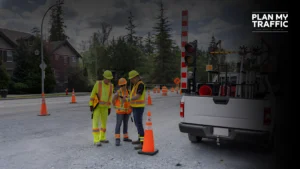
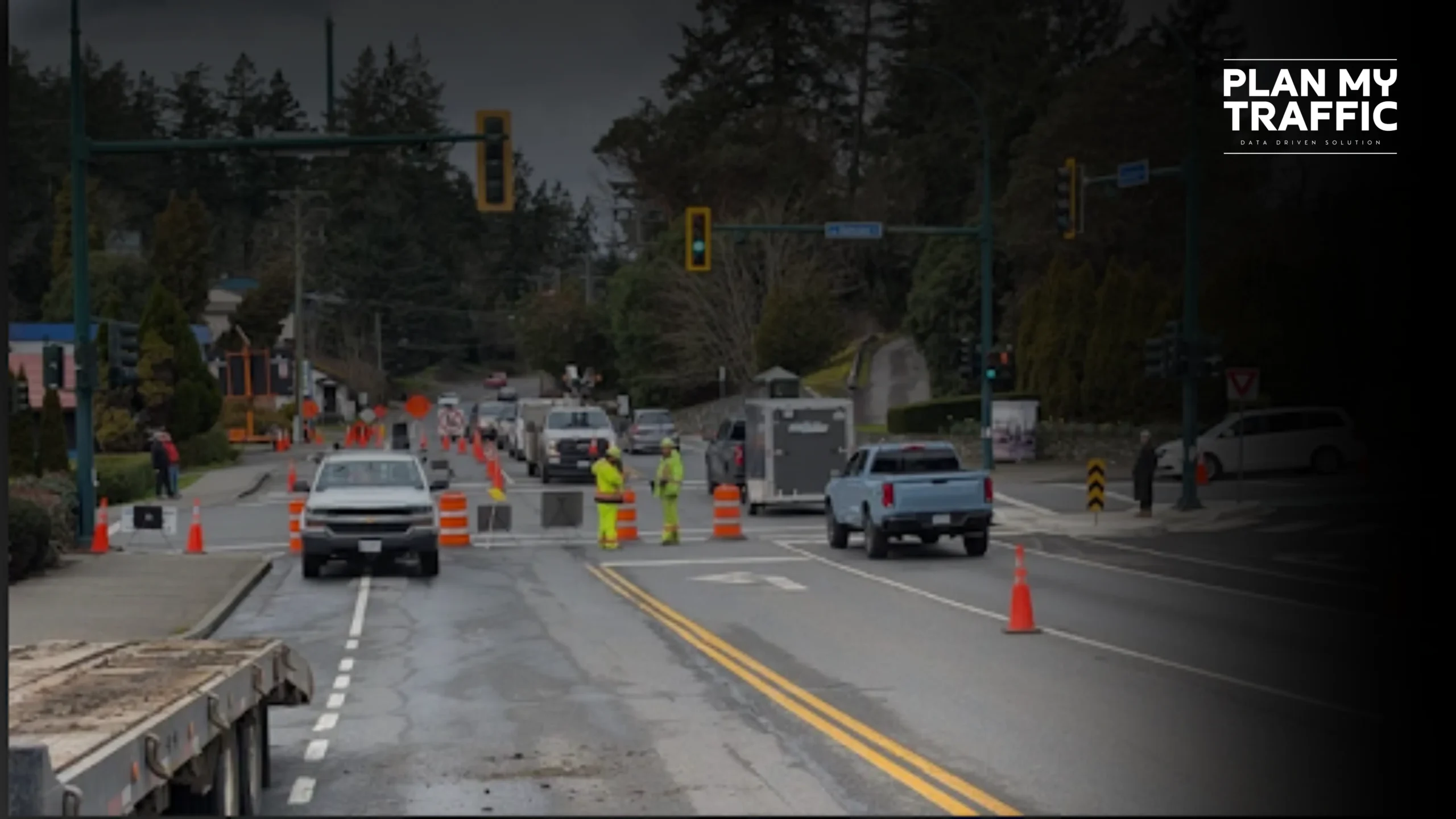
Facing unexpected hold-ups on your Nanaimo construction project? Project managers understand that efficient site operations are critical for staying on schedule and within budget. Unforeseen delays, particularly those caused by poorly managed traffic flow during essential lane closures, can quickly derail even the most carefully planned timelines, leading to significant cost overruns and frustration.
This guide will outline essential components of an effective traffic management plan tailored for Nanaimo’s specific requirements, ensuring your lane closure projects proceed smoothly and without unnecessary complications.
Ensuring Approval-Ready Traffic Management Plan Nanaimo Submissions
For project managers overseeing construction or utility work in Nanaimo, securing timely permits is paramount to project continuity. A precise and compliant traffic management plan Nanaimo is not merely a bureaucratic step; it is the foundation for operational efficiency and avoiding costly start-up delays. Municipalities like the City of Nanaimo, along with provincial authorities such as the Ministry of Transportation and Infrastructure (MoTT), adhere to strict guidelines outlined in documents like the BC Traffic Management Manual (BC TMM 2020). Submitting a plan that fails to meet these specific requirements often results in immediate rejection, pushing back project timelines and escalating expenses. Understanding these precise local and provincial standards is critical for any project that impacts public right-of-ways or traffic flow. A plan that anticipates and addresses every regulatory nuance significantly accelerates the approval process, allowing your teams to proceed with confidence rather than facing unexpected roadblocks. This proactive approach to your traffic management plan Nanaimo is what defines successful project execution in a demanding environment.
Every element of your proposed work, from lane closures to equipment staging, must be meticulously detailed and compliant with local bylaws and safety regulations. Ignoring even minor details can lead to substantial setbacks. For instance, a common rejection reason in Nanaimo stems from inadequate provision for emergency vehicle access or poorly defined pedestrian detours, which are critical safety considerations for the City of Nanaimo’s bylaws. Partnering with specialists ensures your initial submission for a TMP Nanaimo BC is robust, accurate, and ready for swift approval, circumventing the frustration and financial drain of repeated revisions and resubmissions. Your project’s momentum depends on it.
The High Cost of Non-Compliant Lane Closure Plans in Nanaimo
Project managers are acutely aware that time equals money, and nowhere is this more evident than when a construction project in Nanaimo encounters permit delays. A non-compliant lane closure plan or inadequate work zone plan Nanaimo can trigger a cascade of negative consequences, from extended rental periods for equipment to idle crews and missed contractual deadlines. Imagine a scenario where a critical utility upgrade project on a busy Nanaimo arterial road like Bowen Road faces a three-week delay because the submitted traffic management plan Nanaimo failed to account for bus route detours during peak hours, a requirement of the local transit authority. Such an oversight can easily add tens of thousands of dollars in labour and equipment costs, directly impacting project profitability and client satisfaction.
Beyond the direct financial implications, repeated rejections of your traffic management plan Nanaimo can damage your company’s reputation with municipal authorities, making future permit applications more challenging. When a work zone plan Nanaimo fails to meet WorkSafeBC safety standards or provincial traffic management protocols, the risks extend to potential fines, stop-work orders, and serious safety incidents for both workers and the public. These are not merely administrative hurdles but critical operational risks that demand professional attention. Engaging expert planning early on mitigates these financial exposures and protects your project’s integrity by ensuring an approval-ready traffic management plan from the outset.
Don’t let permit rejections derail your project. Get expert traffic management planning.
Request Your Approval-Ready TMP Quote
Key Components of an Effective Traffic Management Plan for Nanaimo Projects
An effective traffic management plan Nanaimo goes beyond just drawing lines on a map; it requires a deep understanding of local traffic patterns, infrastructure, and the specific regulatory landscape. For any significant project in Nanaimo impacting public roads, the plan must be a dynamic document that considers multiple variables to ensure safety and efficiency. This section outlines the critical elements that form the backbone of a successful traffic management plan Nanaimo, ensuring it stands up to scrutiny from both regulatory bodies and operational demands. Each component must be integrated smoothly to create a cohesive and actionable strategy, preventing issues before they arise and ensuring the safety of all road users and workers alike. Thorough planning is non-negotiable for project success.
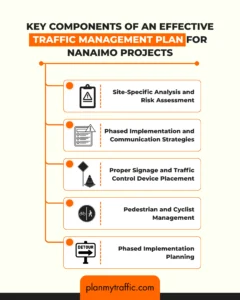
1. Site-Specific Analysis and Risk Assessment
- Conduct a thorough on-site evaluation covering traffic volumes, road classifications, speed limits, and sightlines.
- Perform a detailed risk assessment to pinpoint potential hazards for all road users and on-site personnel.
- Tailor the plan to the unique characteristics of each site, a project on Bowen Road demands very different measures than one on an industrial parkway.
- Address WorkSafeBC requirements for hazard identification and mitigation, particularly where vehicles and workers interact closely.
2. Phased Implementation and Communication Strategies
- Ensure full alignment with BC MoTT guidelines and City of Nanaimo engineering department requirements before submission.
- Reference the BC Traffic Management Manual (BC TMM 2020) for all traffic control device standards and placement protocols.
- Proactively incorporate all regulatory nuances to accelerate the approval process and maintain project momentum.
- A compliant first submission significantly reduces the risk of rejection, saving time and avoiding costly project delays.
3. Proper Signage and Traffic Control Device Placement
- Use only approved Temporary Traffic Control Devices (TTCDs) that meet BC TMM 2020 standards, including signs, cones, barriers, and delineators.
- Place “Road Work Ahead” signs at adequate distances to give motorists sufficient warning and reaction time.
- Use appropriate channelizing devices to clearly define lane closures and prevent driver confusion.
- Incorrect or insufficient device placement is one of the most common reasons for TMP rejection in Nanaimo.
4. Pedestrian and Cyclist Management
- Dedicate a specific section of the plan to the safe movement of pedestrians and cyclists around or through the work zone.
- Never block sidewalks without offering a safe, well-marked, and accessible alternative detour pathway.
- Protect cyclists with proper buffer zones, signage, and clearly defined routes near the work area.
- Align with the City of Nanaimo’s active transportation goals to demonstrate community-focused planning and avoid public complaints.
5. Phased Implementation Planning
- Break large-scale projects into clearly defined phases, each with its own traffic control measures and timelines.
- Specify exact start and end times for each phase to maintain operational clarity and regulatory compliance.
- Outline changes in traffic patterns, temporary signage, and detour routes for every individual stage of work.
- Phased planning is especially critical for extensive utility upgrades or infrastructure projects spanning multiple city blocks.
Avoiding Common Pitfalls in Work Zone Plan Nanaimo Development
Even experienced project managers can encounter unforeseen obstacles when developing a work zone plan Nanaimo if they overlook common pitfalls. These oversights can lead to anything from minor inconveniences to major safety hazards, costly delays, and even project cancellation. The regulatory environment for traffic management in BC is complex, and misinterpretations or incomplete adherence to guidelines are frequent sources of trouble. Understanding where these challenges typically arise allows for proactive planning and mitigates potential project impacts. Ensuring your traffic management plan Nanaimo addresses these areas comprehensively is key to maintaining project momentum and avoiding unnecessary rework. Attention to detail here directly correlates with approval speed and operational success.
Inadequate Signage and Device Placement
One of the most frequent reasons for rejection of a traffic management plan Nanaimo is incorrect or insufficient temporary traffic control device (TTCD) usage. This includes improper placement of signs, cones, barriers, and flaggers, or using devices that do not meet BC TMM 2020 standards. For example, placing a “Road Work Ahead” sign too close to the actual work zone on Island Highway prevents drivers from having adequate warning and reaction time, posing a significant safety risk. Similarly, failing to use appropriate channelizing devices to clearly delineate a lane closure can lead to confusion and potential collisions. Every sign must be visible, relevant, and in the correct sequence and distance, as specified by provincial guidelines. Skipping this crucial detail often means costly re-planning, re-printing, and delaying your project start.
Overlooking Pedestrian and Cyclist Management
While often focused on vehicular traffic, many work zone plan Nanaimo submissions neglect the critical needs of pedestrians and cyclists. In a growing city like Nanaimo, with active transportation routes, failing to provide safe, clear, and accessible pathways can lead to public complaints, safety hazards, and permit refusal. A typical oversight involves blocking sidewalks without providing a safe, well-marked, and accessible detour, or failing to protect cyclists passing through or near the work zone. Accessibility standards for people with disabilities, requiring smooth, firm surfaces and adequate width, must also be incorporated. A comprehensive traffic management plan Nanaimo must include dedicated sections addressing pedestrian and cyclist safety, ensuring their safe passage around or through the work area without confusion or risk, aligning with City of Nanaimo’s active transportation goals.
Ready to prevent costly rework and delays? Get professional support for your TMP.
Get Professional Traffic Planning Here
The Execution Advantage: How Expert Traffic Management Keeps Your Nanaimo Project on Track
Having an approved traffic management plan Nanaimo is just the first step; successful execution is where the real value lies. Project managers need confidence that the plan will be implemented correctly and flexibly adapted to on-site realities. This is where professional traffic control services provide an invaluable advantage. Beyond just creating the plan, experts ensure that certified Traffic Control Persons (TCPs) are deployed, all equipment (signage, barricades, lighting) meets regulatory standards, and communication protocols are maintained with local authorities. For instance, during a complex road paving project on Trans-Canada Highway in Nanaimo, a professional team can swiftly adjust the work zone plan Nanaimo to accommodate unexpected traffic surges or equipment breakdowns without compromising safety or compliance. This adaptive capacity is crucial for maintaining project flow and avoiding unscheduled interruptions.
Professional implementation also means adherence to strict safety standards set by WorkSafeBC, minimizing risks for both the public and on-site personnel. Specialists handle all aspects of coordination with the BC Ministry of Transportation and Infrastructure and the City of Nanaimo’s engineering department, ensuring that any necessary adjustments or unforeseen circumstances are managed efficiently and officially. This level of detail and proactive management means your TMP Nanaimo BC is not just a document, but a living, effective safety and efficiency protocol. It ensures that your project avoids common operational headaches and remains on schedule from start to finish. Our commitment to operational reliability and approval readiness provides peace of mind.
Gaining Project Confidence and Preventing Rework in Nanaimo
Ultimately, the objective for any project manager is to deliver projects on time, within budget, and without incident. A professionally developed and executed traffic management plan Nanaimo directly contributes to these goals by providing a clear, compliant, and actionable framework. It prevents the costly cycle of permit rejections, redesigns, and re-submissions, which can severely impact project profitability. When your traffic management plan Nanaimo is developed by experts, you gain immediate confidence in its approval potential and its practical application on the ground. This minimizes administrative burdens on your internal teams, allowing them to focus on core project deliverables. Think of it as an investment in project continuity, where avoiding just one significant delay can easily offset the cost of expert planning services.
By securing a robust traffic management plan Nanaimo, project managers are not just meeting a regulatory obligation; they are proactively safeguarding their project’s financial health and timeline. This strategic approach ensures that every phase of your work, from initial lane closures to final site demobilization, proceeds without unforeseen complications, enhancing your reputation for reliability and efficiency. Eliminate the uncertainty and focus on successful project delivery. For further insights on ensuring smooth project execution, consider exploring detailed articles on Special Event Traffic Management Plans and other traffic management planning resources. Your project success in Nanaimo hinges on proactive, expert planning.
Conclusion
A professionally developed traffic management plan is not just a regulatory requirement for Nanaimo construction projects, it is a strategic investment in your project’s overall success. By ensuring full compliance with BC TMM 2020 standards, City of Nanaimo bylaws, and WorkSafeBC requirements, and by addressing every critical element from signage placement to pedestrian safety, project managers can confidently avoid costly permit rejections, stop-work orders, and schedule overruns. Plan My Traffic delivers the precise, executable plans necessary for efficient site operations and guaranteed approval confidence, keeping your timelines on track. Avoid unnecessary risks; invest in expert traffic planning to protect your project’s progress and budget.
Ready to get started? Get professional traffic planning support today.
Frequently Asked Questions
Q1. What is a Traffic Management Plan (TMP) and why is it required for Nanaimo construction projects?
A Traffic Management Plan (TMP) is a detailed document that outlines how traffic, pedestrians, and cyclists will be safely managed around a construction or utility work zone. In Nanaimo, it is required by the City of Nanaimo and the BC Ministry of Transportation and Infrastructure (MoTT) to ensure public safety, regulatory compliance, and smooth project execution. Without an approved TMP, your project cannot legally begin work on or near public roads.
Q2. What are the most common reasons a Traffic Management Plan gets rejected in Nanaimo?
The most frequent rejection reasons include improper or insufficient placement of temporary traffic control devices (TTCDs), failure to account for pedestrian and cyclist detours, inadequate emergency vehicle access provisions, non-compliance with BC Traffic Management Manual (BC TMM 2020) standards, and overlooking bus route detour requirements during peak hours.
Q3. How long does it take to get a Traffic Management Plan approved in Nanaimo?
Approval timelines vary depending on the complexity of the project and the completeness of the submission. A well-prepared, fully compliant TMP submitted by experienced professionals is significantly more likely to receive faster approval, whereas incomplete or non-compliant plans can face weeks of delays due to revisions and resubmissions.
Q4. Do I need a separate plan for pedestrians and cyclists in my work zone plan?
Yes. The City of Nanaimo requires dedicated provisions for pedestrian and cyclist safety as part of any work zone plan. This includes clearly marked detour pathways, accessible routes for people with disabilities, buffer zones for cyclists, and proper signage all aligned with the city’s active transportation goals.
Q5. How does Plan My Traffic ensure my Nanaimo TMP avoids project delays?
We create Nanaimo-specific Traffic Management Plans that meet all local and provincial regulations, including WorkSafeBC requirements. Our detailed plans proactively address potential issues, such as pedestrian conflicts or access interruptions, ensuring smooth permit approval and preventing expensive construction setbacks. Our expertise minimizes revisions and keeps your project moving.