What are the requirements for a Traffic Control Plan (TCP)?
An MUTCD compliant Traffic Control Plan requires precise engineering standards, including proper sign spacing (A, B, C distances), calculated taper lengths, and buffer space specifications. To secure permit approval, a TCP must detail channelizing devices, work zone phasing, and often require a Professional Engineer (PE) stamp to ensure site safety and regulatory compliance.
Core MUTCD Requirements for 2026: The Essential Checklist
Safety in work zones follows the Manual on Uniform Traffic Control Devices (MUTCD), now in its 11th Edition with 2026 Revision 1. It stresses clear visibility and smooth driver changes. Check state supplements for local mutcd.fhwa.dot
Standard Signage & Placement (A, B, C Distances)
Sign spacing is not random; it depends on the road type and speed limit. These distances ensure drivers have enough time to react.
- Spacing fits road type and speed so drivers react in time. Use Table 6C-1 from MUTCD Part 6.x+1
- Urban low speed: 100 ft.
- Urban high speed: 350 ft.
- Rural: 500 ft.
- Freeways/expressways: 1,000–1,500+ ft.[atssa]
Taper Lengths & Buffer Spaces: Technical Calculations
Tapers guide vehicles smoothly. Use these formulas where = taper length (ft), = offset width (ft), = speed (mph). From MUTCD Table 6C-4.mutcd.fhwa.dot+1
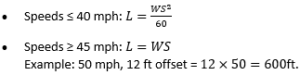
Buffer Spaces: This is the longitudinal space between the transition taper and the actual work area. It provides a recovery zone for errant vehicles and is a mandatory safety requirement in 2026 guidelines.
Device Specifications
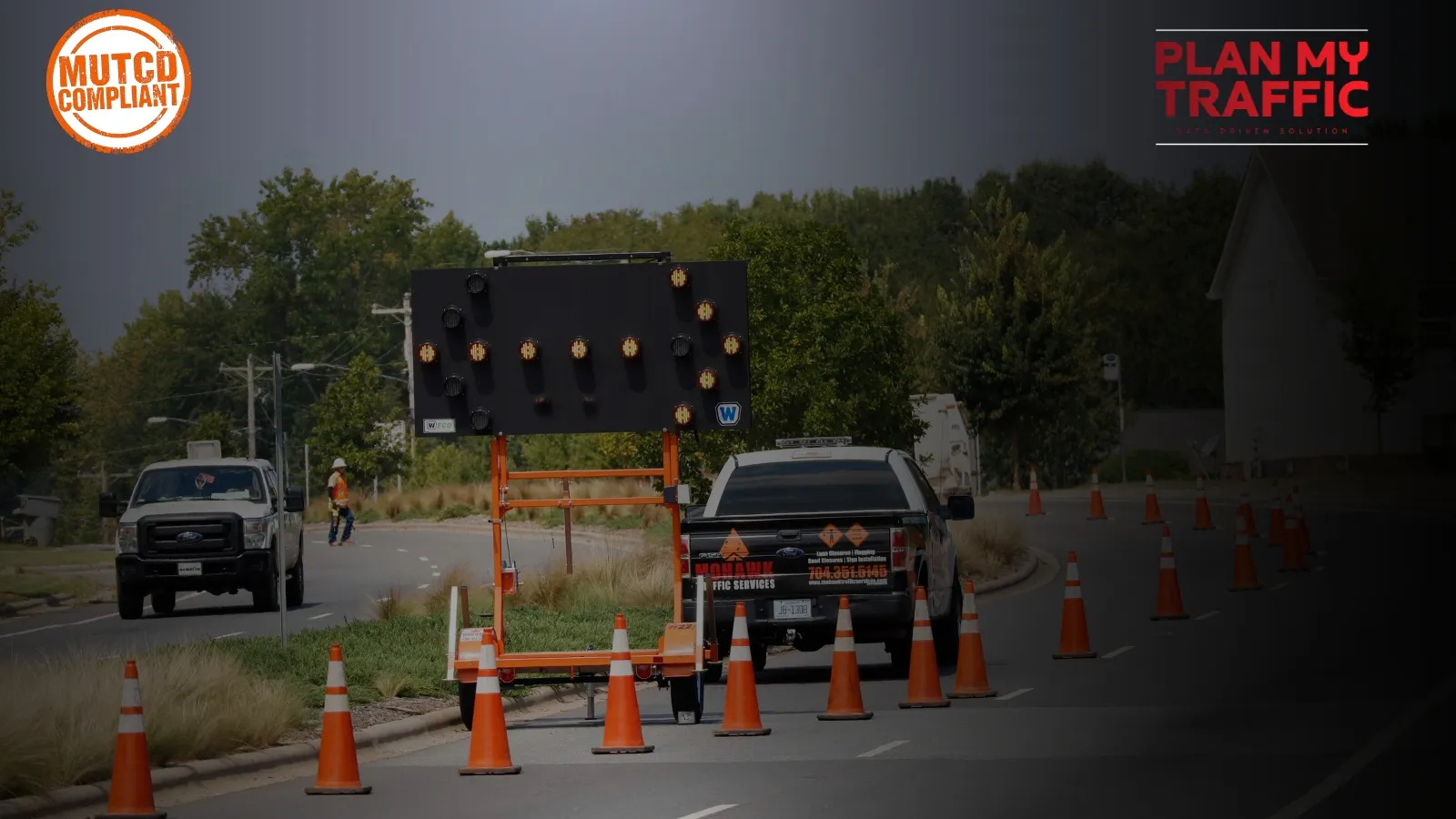
All channelizing devices (cones, drums, barricades) must be retroreflective for night time visibility. In 2026, the use of AFADs (Automated Flagger Assistance Devices) is highly encouraged for increased worker safety.
Essential Components of a Professional TCP
A sketch on a napkin won’t get you a permit. A professional plan must include:
-
Engineering Stamps: Most cities now mandate a Professional Engineer (PE) stamp for any complex lane closures or high speed zones to mitigate liability.
-
Vicinity & Location Maps: Clear identification of the project boundaries and surrounding intersections.
-
Work Zone Phasing: If the project lasts weeks, your TCP must show how traffic shifts in Phase 1 vs. Phase 2.
Work Zone Safety Checklist (Practical Implementation)
Creating a plan on paper is not enough; proper on-site implementation is a core part of Traffic Control Plan requirements. According to 2026 standards, your site must follow this checklist:
-
High-Visibility Apparel: All workers must wear ANSI/ISEA Class 2 or Class 3 vests. This is mandatory, especially during night work.
-
Night-time Illumination: If work is being done after sunset, the work area must have proper lighting so that both drivers and workers have clear visibility.
-
Device Maintenance: Cones and barricades must be free of dust or dirt. Check their retro-reflectivity regularly to ensure they remain bright from a distance.
-
Buffer Zone Integrity: Never store any equipment or materials in the buffer space. This area must remain empty solely for safety recovery.
Local Agency Variations (Caltrans, DOT, & City Rules)
Although MUTCD is a national standard, every state and city has its own additional rules. It is essential to consider these when creating a professional TCP:
-
Caltrans (California): They have their own Standard Plans and Specifications, which are often more stringent than the national MUTCD.
-
City-Specific Permits: In some cities, lane closures are not allowed during peak hours. Your TCP must clearly mention these specific “Work Hours.”
-
Pedestrian Accessibility (ADA): In modern urban areas, it is now mandatory to show wheelchair accessibility and safe paths for visually impaired pedestrians, not just vehicle traffic.
Temporary vs. Construction Traffic Control: Key Differences
| Feature | Temporary Traffic Control (TTC) | Construction Traffic Control |
| Duration | Short term (Minutes to hours) | Long term (Days to years) |
| Devices | Cones, Sign stands | Barriers (K-rail), Temporary Striping |
| Complexity | Low Standard Typical Apps | High – Site-specific Engineering |
| Permit Type | Daily Work Permit | Encroachment / Night Work Permit |
The Permit Approval Process: Navigating State & City Rules
Getting your Encroachment Permit depends on how well you address agency comments.
-
Submission: Submit your MUTCD-compliant drawings to the City or DOT.
-
Review: Agencies check for impact on local businesses and emergency routes.
-
Approval Guarantee: At PlanMyTraffic, we specialize in handling agency revisions so your project doesn’t stall.
Common Reasons TCPs Get Rejected (And How to Avoid Them)
Avoid these mistakes to save time and money:
-
Inaccurate Scale: Plans must be drawn to engineering scale (e.g., 1″ = 40′).
-
Missing Pedestrian Access: You must provide an ADA-compliant detour if sidewalks are blocked.
-
Outdated Typical Applications: Using 2011 standards in 2026 is a surefire way to get rejected.
Why Outsource Your TCP to Professionals?
Engineering a traffic plan is about more than just moving cars; it’s about liability protection. Outsourcing to experts like PlanMyTraffic ensures:
-
100% MUTCD Compliance.
-
Faster Permit Turnaround.
-
Cost-Efficiency by avoiding project delays.
Frequently Asked Questions (FAQ)
What is the 2026 MUTCD update for construction zones?
The 2026 focus is on enhanced visibility, electronic speed displays, and stricter requirements for pedestrian/bicycle detours in work zones.
How long does it take to get a TCP approved?
Depending on the agency, it can take anywhere from 48 hours to 4 weeks. Professional engineering firms can often expedite this through pre-checked templates.
Do I need an engineer’s stamp for a small lane closure?
For minor residential streets, sometimes no. However, for any major arterial or state highway, a PE stamp is almost always a requirement.
What is the difference between a Flagger and an AFAD?
A flagger is a person who manually controls traffic, whereas an AFAD (Automated Flagger Assistance Device) is a remote-controlled machine designed to enhance worker safety.
How often should a Traffic Control Plan be updated?
If the project timeline extends or site conditions change, the TCP must be updated immediately and submitted for re-approval.