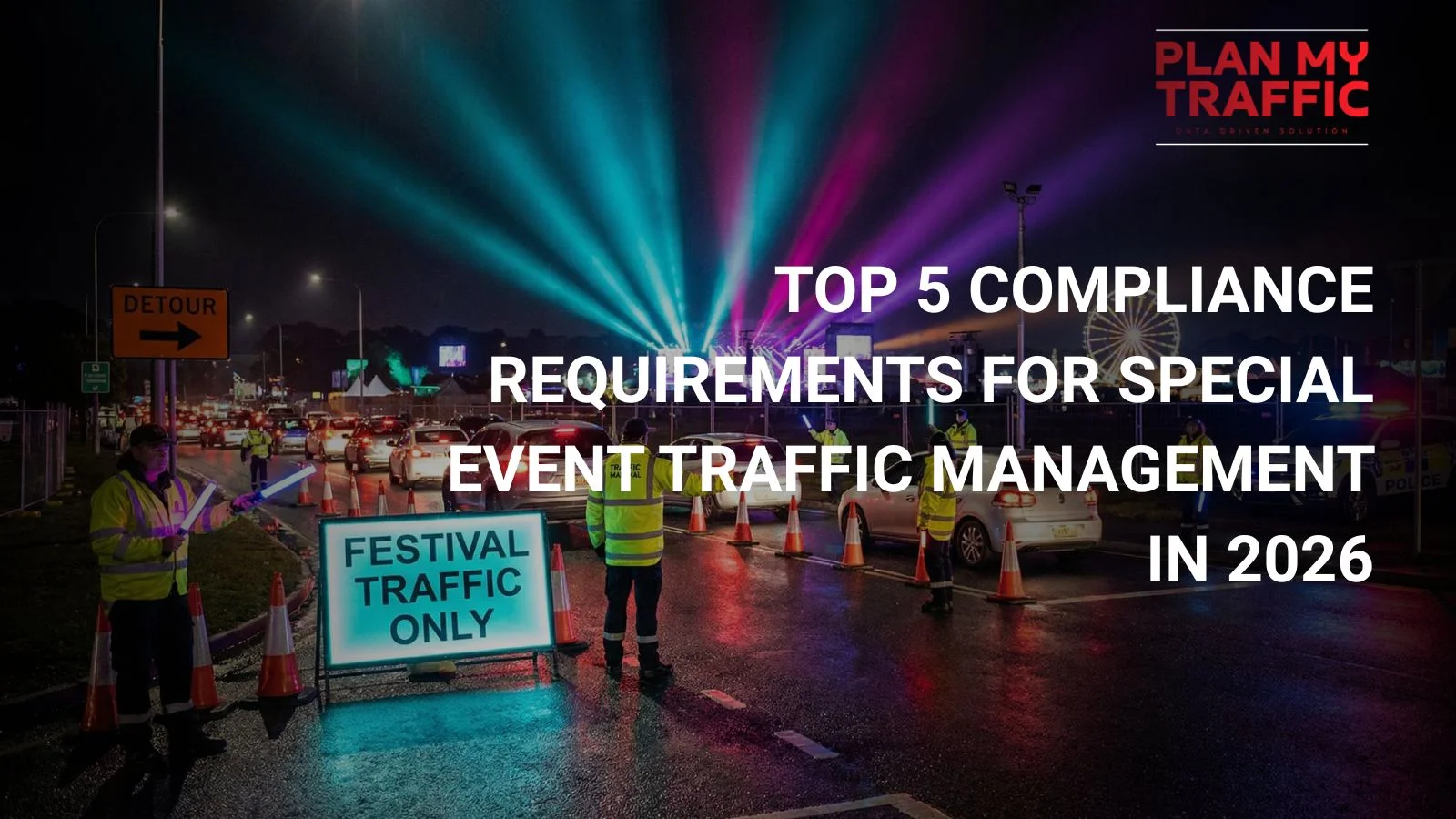
Top 5 Compliance Requirements for Special Event Traffic Management in 2026
Special events are returning at full scale across Canada festivals, marathons, concerts, parades, cultural celebrations, sporting tournaments, and community gatherings are drawing larger crowds than ever.
But as attendance grows, so does regulatory scrutiny.
In 2026, municipalities and transportation authorities are placing greater emphasis on structured planning, public safety documentation, accessibility compliance, and emergency coordination. A professionally prepared Special Event Traffic Management Plan (TMP) is no longer optional it is a critical approval requirement.
Whether you’re an event organizer, production company, contractor, or municipal partner, understanding the top compliance requirements for special event traffic management can prevent permit delays, safety risks, and costly last-minute revisions.
This guide outlines the five most important compliance areas you must address in 2026.
Why Compliance Matters More in 2026
Municipalities are tightening standards for events that impact public roads, sidewalks, transit routes, and emergency corridors.
Special event traffic management must now demonstrate:
-
Public safety prioritization
-
Clear pedestrian and crowd control planning
-
Emergency vehicle access continuity
-
Accessibility compliance
-
Structured traffic device placement
-
Inter-agency coordination
Incomplete or generic submissions frequently result in:
-
Permit delays
-
Revision cycles
-
Inspector intervention
-
Insurance complications
-
Event postponement
A compliant Special Event Traffic Management Plan protects your timeline and your reputation.
1. Site-Specific Traffic Impact Assessment
In 2026, authorities expect more than simple cone layouts.
Your Special Event Traffic Management Plan must include a site-specific assessment covering:
-
Road classification (arterial, collector, local)
-
Speed limits and lane configurations
-
Expected traffic volume patterns
-
Nearby schools, hospitals, or transit corridors
-
Existing signage and signal infrastructure
-
Adjacent construction zones
Municipal reviewers want to see that your traffic staging reflects actual site conditions not recycled templates.
For large-scale events, authorities may require a formal traffic impact evaluation to assess:
-
Intersection capacity
-
Signal timing adjustments
-
Transit rerouting
-
Vehicle detour feasibility
Failure to provide a detailed site analysis is one of the most common reasons for plan rejection.
2. Pedestrian and Accessibility Compliance
One of the most scrutinized areas in 2026 is pedestrian accommodation.
Special events often increase foot traffic dramatically. Your plan must clearly demonstrate:
-
Safe pedestrian detours
-
Barrier separation between vehicles and crowds
-
ADA or accessibility-compliant routing
-
Safe crosswalk transitions
-
Adequate lighting for evening events
Authorities expect accessibility to be integrated not added as an afterthought.
Compliance with federal accessibility standards, including those under the Accessible Canada Act, is increasingly reviewed during event permitting.
Plans that overlook wheelchair access, stroller routing, or clear path-of-travel requirements are frequently returned for revision.
For events in dense urban areas, pedestrian flow modeling may also be required to prevent bottlenecks and crowd compression points.
Compliance in this area directly impacts public safety.
3. Emergency Vehicle Access and Incident Response Planning
Emergency access continuity is non-negotiable.
Your Special Event Traffic Management Plan must clearly identify:
-
Dedicated emergency access corridors
-
Minimum lane width preservation
-
Fire route continuity
-
Ambulance staging areas
-
Police access flexibility
Authorities often require coordination with:
-
Fire departments
-
EMS services
-
Local police
-
Transit agencies
In 2026, many municipalities now request written confirmation that emergency services have reviewed the traffic staging plan.
A compliant plan should include:
-
Clearly marked emergency routes
-
Buffer zones around critical access points
-
Contingency plans for incident response
-
Contact coordination lists
If emergency access is unclear, approval is unlikely.
4. Structured Device Placement and Work Zone Standards
Special events frequently involve temporary lane closures, road occupancy, and intersection control.
Your traffic management plan must follow recognized work zone safety principles, including alignment with national guidance such as standards published by the Transportation Association of Canada.
Key compliance elements include:
-
Proper taper length calculations based on speed
-
Correct buffer zone spacing
-
Approved signage types and placement distances
-
Barricade and channelization device standards
-
Visibility considerations (night-time reflective requirements)
-
Advance warning sign sequencing
Improper taper lengths or incorrect sign spacing are among the top causes of inspector corrections.
Authorities expect calculations to be structured, consistent, and documented not estimated.
Precision in device placement demonstrates professionalism and reduces liability exposure.
5. Inter-Agency Coordination and Permit Documentation
In 2026, event approvals often require coordination beyond transportation departments.
Depending on event scale, you may need clearance from:
-
Municipal traffic operations
-
Police services
-
Fire services
-
Emergency management
-
Transit authorities
-
Public works departments
Your submission package should include:
-
Clear staging diagrams
-
Event schedule and duration
-
Peak attendance estimates
-
Load-in and load-out timing
-
Road reopening strategy
-
Contact information for on-site coordinators
Authorities increasingly expect communication plans that outline:
-
Public notification strategies
-
Detour signage communication
-
Variable message sign coordination
-
Social media or press coordination for closures
Well-documented inter-agency coordination significantly improves first-pass approval rates.
Common Reasons Special Event Traffic Plans Are Rejected
Even experienced organizers encounter compliance issues.
The most frequent problems include:
-
Generic templates not customized to site
-
Missing pedestrian routing diagrams
-
Incomplete emergency access mapping
-
Incorrect device spacing
-
Lack of accessibility consideration
-
Unclear phasing for multi-day events
-
Failure to account for adjacent construction
Many rejections are preventable with structured planning and compliance review before submission.
How Compliance Protects More Than Just Approval
A properly structured Special Event Traffic Management Plan provides operational benefits beyond regulatory approval.
Stronger Public Safety Outcomes
Clear routing reduces confusion and collision risk.
Reduced Liability Exposure
Documented compliance provides defensible evidence in case of incident.
Smoother Event Execution
Field crews deploy signage confidently with minimal adjustments.
Improved Reputation With Authorities
Consistent compliance builds trust for future events.
Faster Permit Approvals
Structured documentation reduces revision cycles.
Compliance is not just paperwork it is operational risk management.
What a 2026-Compliant Special Event TMP Should Deliver
To meet 2026 standards, your plan should include:
-
Site-specific roadway analysis
-
Structured taper and buffer calculations
-
Clear pedestrian and accessibility routing
-
Emergency vehicle access mapping
-
Phased staging diagrams
-
Device quantity breakdown
-
Visibility and night-time considerations
-
Inter-agency coordination notes
-
Permit-ready formatting
Speed matters but compliance matters more.
A professionally prepared plan balances both.
When Professional Support Becomes Critical
Consider expert support when:
-
The event impacts multi-lane arterial roads
-
Attendance exceeds 1,000+ participants
-
Night operations are involved
-
Transit routes are affected
-
Multiple agencies require coordination
-
Approval timelines are tight
Special event traffic management is more complex than typical construction staging. Crowd dynamics, event timing, and public communication add layers of risk that must be addressed carefully.
Final Thoughts: Compliance Is the Foundation of Successful Events
In 2026, regulatory expectations for Special Event Traffic Management are higher than ever.
Authorities expect structured documentation, accessibility integration, emergency continuity, and precise device placement.
The top five compliance requirements site analysis, pedestrian safety, emergency access, standardized device placement, and inter-agency coordination form the foundation of a successful approval process.
When properly planned, a compliant Special Event Traffic Management Plan protects:
-
Public safety
-
Event reputation
-
Operational efficiency
-
Permit timelines
-
Legal exposure
If your upcoming event impacts public roadways or pedestrian corridors, securing a professionally structured, compliant traffic management plan early can prevent costly disruptions later.
Because when large crowds gather, precision in traffic planning is what keeps everything moving safely and smoothly.
Request a Quote
Ready to Work Together? Build a project with us!