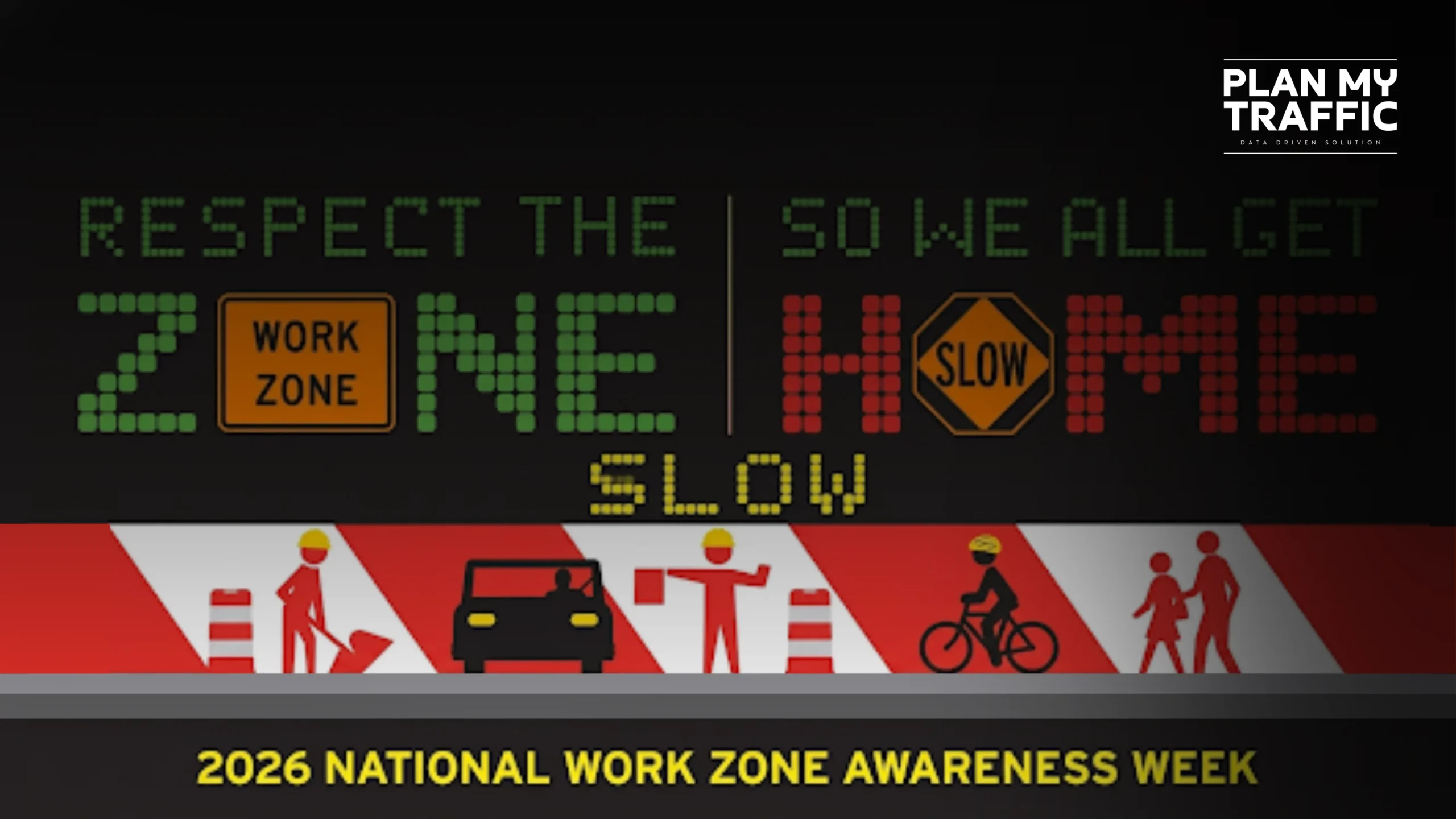
National Work Zone Awareness Week (NWZAW) runs April 20–24, 2026, with the theme “Safe Actions Save Lives.” For British Columbia contractors, it’s a timely reminder: a properly submitted traffic management plan is not optional , it’s what keeps your crew, your permit, and your project on track.
BC’s construction season peaks in spring. Work zones without a compliant traffic management plan expose contractors to WorkSafeBC fines, permit denials, and real worker fatalities.
Why BC Work Zones Are High Risk
BC strictly enforces construction zone speed limits fines are doubled when workers are present, with speeds reduced to 70 km/h on highways and 30 km/h on municipal roads.
From 2013 to 2022 in BC alone, 9 roadside workers were killed and 239 were seriously injured. Across North America, work zone fatalities reached 899 in 2023 , most were drivers who entered poorly marked zones.
A site-specific traffic management plan with correct taper lengths, buffer zones, and detour routes is your first line of defence.
National Work Zone Awareness Week serves as a critical reminder for every BC contractor to implement a compliant traffic management plan, ensuring the safety of both workers and the public in active construction zones. Adhering to these guidelines not only mitigates risks but also enhances operational efficiency during this vital period.
What BC Requires in a Traffic Management Plan
In BC, a compliant traffic management plan must satisfy both the BC Ministry of Transportation & Infrastructure (MoTT) and WorkSafeBC Part 18 Traffic Control regulations (updated December 2021).
The BC 2020 Traffic Management Manual for Work on Roadways (TMM) outlines exactly what your plan must include:
-
Proposed traffic detour routes
-
Flagging (TCP) personnel positioning and supervision
-
Signage layout and placement per BC standards
-
Emergency vehicle access planning
-
Pedestrian safety zones and alternative pathways
-
Risk assessment and incident response protocols
Missing any of these means your traffic management plan gets rejected , delaying your mobilization and compressing your entire build window.
NWZAW Action: Review Your Traffic Management Plan Now
NWZAW 2026 is the perfect trigger to audit your work zone documentation before peak season hits BC.
-
Does your traffic management plan reference the 2020 BC TMM standards?
-
Is your TCP positioning compliant with the 2021 WorkSafeBC Part 18 revisions?
-
Have you accounted for pedestrian bypass routes?
-
Is your plan accepted by the District Highway Manager (for MoTT projects)?
-
For municipal roads (e.g., Abbotsford, Surrey, Vancouver), have you submitted at least 7 business days before planned works?
If you answered no to any of the above, your traffic management plan needs a revision before submission.
BC’s Cone Zone Campaign Aligns With NWZAW
BC runs its annual Cone Zone campaign every spring, reminding employers and drivers that roadside work zone safety is a shared responsibility.
NWZAW and Cone Zone together send one clear message to BC contractors: plan properly and submit a traffic management plan that protects your team and passes first-round review. Speed and compliance are not opposites with the right team, you get both.
Get Your BC Traffic Management Plan in 8 Hours
Plan My Traffic delivers permit-ready traffic management plans for British Columbia projects aligned with MoTT, WorkSafeBC, and local municipality requirements.
Don’t let NWZAW week catch your site non-compliant.
Request your BC traffic management plan quote — delivered in 8 hours.
Request a Quote
Ready to Work Together? Build a project with us!
Frequently Asked Questions
Q1: Who needs a traffic management plan in BC?
Any contractor, utility company, or project manager whose work causes disruption to vehicles, cyclists, or pedestrians on BC roads — whether a highway, laneway, or sidewalk is required to have a compliant traffic management plan under WorkSafeBC Part 18 and the BC 2020 Traffic Management Manual.
Q2: How long does it take to get a traffic management plan approved in BC?
BC municipalities typically require a minimum of 7 business days between submission and planned works for smaller projects. Larger or complex projects (multi-lane, high-traffic corridors) can take 7–14 business days for review. Always start your traffic management plan preparation at least 30 days before your scheduled construction start to avoid delays.
Q3: What happens if I start work without a traffic management plan in BC?
Working without an approved traffic management plan in BC can result in a stop-work order from WorkSafeBC, permit denial, project delay, and doubled fines in active work zones. In serious cases, it exposes the contractor to legal liability for any incidents or injuries that occur on site.