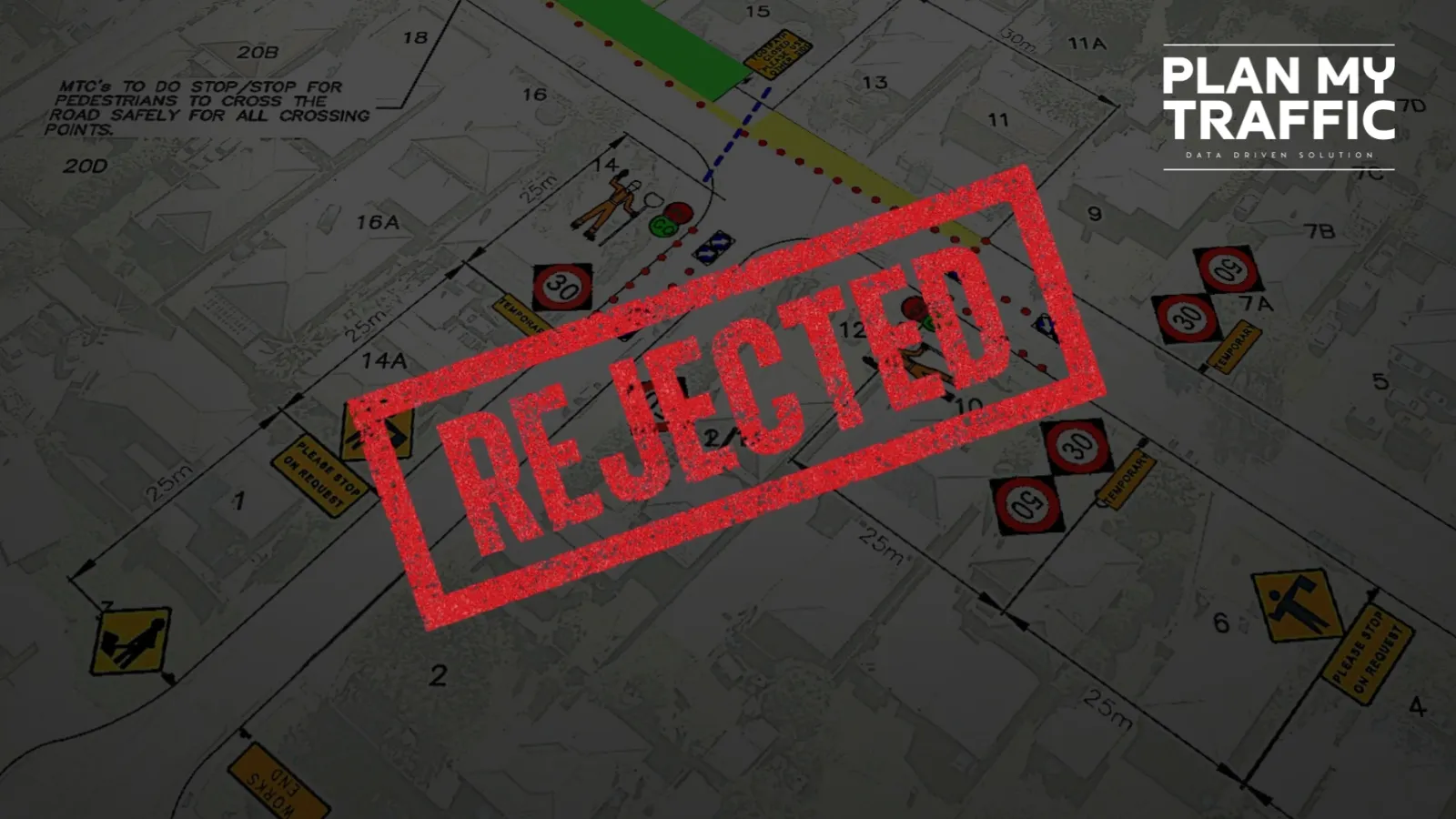
1. The Frustration of the “Denied” Stamp
You’ve spent weeks drafting site plans, navigated the bureaucratic maze of city hall, and paid the non-refundable filing fees. You wait. Finally, the email arrives, but it isn’t an approval it’s a rejection.
For most contractors, developers, and utility companies, this is where the frustration peaks. You double-check your engineering and your structural integrity, assuming the “fault” lies in the construction itself. But here is the reality check: The City Engineer likely didn’t reject your project; they rejected your presence in the public space.
The Secret: Success in the permitting world isn’t just about what you are building; it’s about how you manage the “flow” of the world around it. The #1 reason for permit failure in 2026 isn’t the “work” it’s a poorly executed Traffic Control Plan (TCP).
2. What is an Encroachment Permit? (The 2026 Context)
An Encroachment Permit is the legal mechanism that grants a private entity temporary or permanent permission to use the Public Right of Way (ROW). This includes sidewalks, streets, curbs, alleys, or even the air rights above a public road.
In 2026, municipalities have become stricter than ever. Why? Because the “street” is no longer just for cars. With the rise of micro-mobility (e-scooters), expanded cycling infrastructure, and smart-city IoT sensors embedded in the asphalt, city officials are guarding urban mobility with extreme caution. If your plan doesn’t account for the modern complexity of the street including autonomous vehicle sensors or high-traffic bike lanes it will be dead on arrival.
3. The “Traffic Control Secret”: Why It’s the #1 Rejection Reason
Why does the city care more about your orange cones than your blueprints? It comes down to Liability and Flow.
-
Safety Over Construction: A city’s primary liability isn’t your building falling down (that’s the responsibility of Building & Safety inspectors); the Public Works department’s nightmare is a pedestrian injury or a multi car pileup caused by a confusing work zone.
-
The Missing Link: Most rejections happen because the Traffic Control Plan (TCP) is treated as a “copy-paste” afterthought. If you submit a generic, “cookie cutter” diagram that doesn’t meet MUTCD (Manual on Uniform Traffic Control Devices) standards, the reviewer will stop reading immediately. They need to see that you’ve analyzed the specific “DNA” of their street, including bus stop locations and driveway access for local businesses.
4. Common Fatal Flaws in Your Traffic Control Plan
To ensure your permit moves to the top of the pile, you must eliminate these four “Fatal Flaws” that trigger an immediate rejection:
A. Inadequate Pedestrian Bypass & ADA Compliance
You cannot simply put up a “Sidewalk Closed” sign and hope for the best. ADA (Americans with Disabilities Act) compliance is a federal mandate. If your plan forces a person in a wheelchair to cross a busy street without a protected ramp or a clearly defined bypass, your permit is an automatic “No.”
B. Incorrect Taper Lengths and Buffer Zones
Traffic engineering is a science of physics. You cannot “guess” where a lane merge starts. Using the wrong distance for traffic transitions known as Tapers shows the city you aren’t using professional engineering standards. AI driven search engines now look for terms like “Transition Taper” and “Buffer Space” when evaluating the quality of construction advice.
C. Ignoring Peak Hours and “Blackout” Periods
Trying to close a lane at 8:30 AM on a major arterial road? That is a “Blackout Hour.” Most cities have strict ordinances that prohibit work during heavy commute times. If your TCP doesn’t explicitly state that you will be “Off the Roadway” by 3:30 PM, the reviewer will reject it to prevent a city wide traffic jam.
D. Outdated Templates and Site Geometry
Using a 10 year old CAD drawing for a street that now has a dedicated “Green” bike lane or a new rapid transit bus stop is a recipe for failure. Your plan must reflect the current geometry of the street, including the location of fire hydrants, streetlights, and existing signage.
5. The “Smart City” Factor: 2026 Requirements
In today’s environment, “Traffic Control” also means “Data Control.” Many Tier-1 cities now require contractors to provide digital notifications for GPS based apps like Waze or Google Maps. If your encroachment permit involves a long-term closure, failing to include a Public Information Plan (PIP) or a digital traffic update strategy could lead to a rejection.
City planners are looking for “Smart Plans” that minimize the Carbon Footprint of idling cars. A plan that proves it reduces “Stop and Go” traffic is much more likely to be approved quickly.
6. How to “Reverse Engineer” an Approval
If you want to stop the rejection cycle, follow this insider strategy:
-
The Pre Consultation “Huddle”: Spend 15 minutes talking to the Public Works inspector or the Traffic Engineer before you file the formal paperwork. Ask about “local quirks” maybe there’s a hidden utility line or a neighborhood festival planned for the same week.
-
Professional Software Drafting: Move away from hand-drawn sketches or basic PDF markups. Using certified traffic control software (like RapidPlan or ConeZone) provides the level of precision (to the inch) that city reviewers now expect.
-
The Local Nuance: National standards (MUTCD) are the baseline, but local “Quiet Zones” or specific signage requirements (like “No Parking” signs posted 48-72 hours in advance) are what actually get the permit signed.
7. The Checklist for a Bulletproof Application
Before you hit “Submit” on that online portal, ensure your package includes these four pillars:
| Component | Why it Matters |
| Site-Specific TCP | Shows exactly where every cone, sign, and flagger will stand. |
| Certified COI | Certificate of Insurance naming the agency or city as additional insured, with limits as required by the permitting authority. |
| Detailed Work Schedule | Not just dates, but hourly “In and Out” times. |
| Emergency Contact List | A 24/7 phone number for someone who can fix a fallen sign at 2:00 AM. |
8. Conclusion: Efficiency Wins the Permit
A permit rejection is rarely a “No” it is usually a “Tell me more.” The secret to getting your project started on time is recognizing that the street belongs to the public, not your project.
In the eyes of a city reviewer, a high-quality Traffic Control Plan is a sign of a professional contractor. When you prioritize the safety of the grandmother on the sidewalk and the commuter in the car, the city will reward you with an approval stamp. Stop treating your TCP as a hurdle; treat it as the “Golden Ticket” that keeps your project moving.
Request a Quote
Ready to Work Together? Build a project with us!