Traffic Signal Timing Plan
Optimize traffic flow, reduce delays, and enhance safety with expert designed signal timing plans for intersections across USA, Canada, Australia & New Zealand.
- Home
- Traffic Signal Timing Plan
Key Components of a Signal Timing Plan
- Cycle Length: Total time for all phases to complete.
- Phases: Specific movements (e.g., left turns, pedestrian crossings).
- Green, Yellow & All-Red Times: Safety and efficiency intervals.
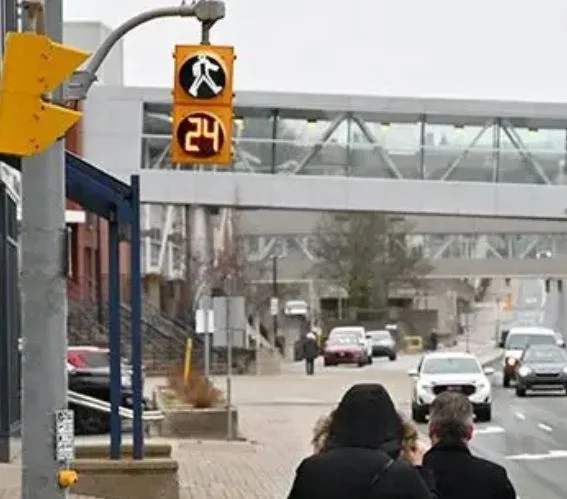
- Pedestrian Timing: Walk, Flash Don’t Walk, and clearance intervals.
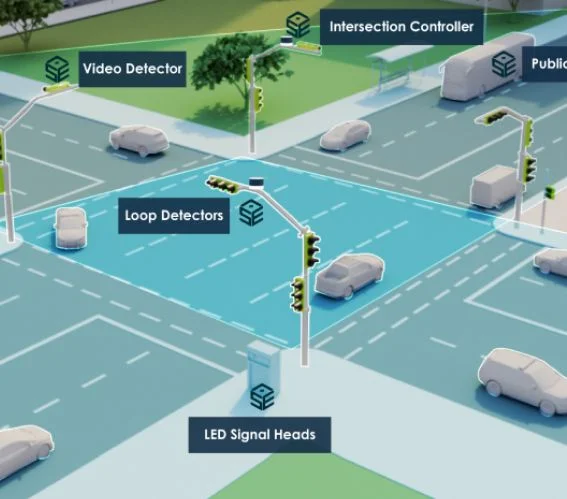
- Detection Systems: Loop, radar, and video sensors for adaptive control.
- Coordination: Corridor wide synchronization for “green wave” traffic flow.
Signal Timing Plans for Temporary Construction Zones
Portable & Adaptive Timing for Roadwork and Detours
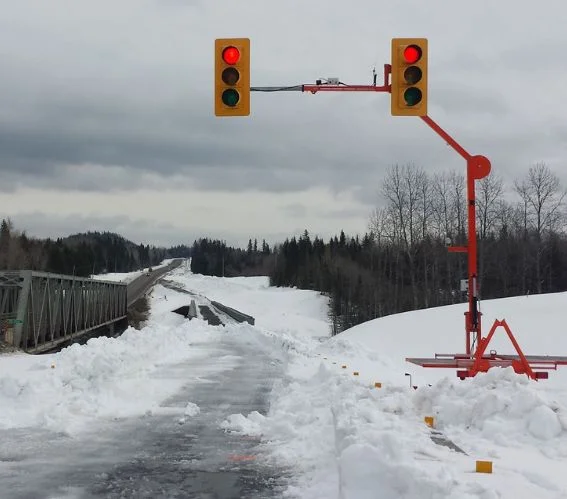
Temporary signal timing plans are essential for managing traffic during construction, bridge repairs, and utility work. These plans prioritize safety and minimize disruption.
Temporary Signal Timing Features
- Trailer-mounted or portable signal systems.
- Simplified phasing and staging sequences.
- Detection integration (if applicable).
- Visibility focused signal head placement.
- Pedestrian and vehicle phase coordination.
- Optimization using tools like Synchro and SimTraffic.
Permanent Signal Timing Plans
Long Term Optimization for Urban Intersections
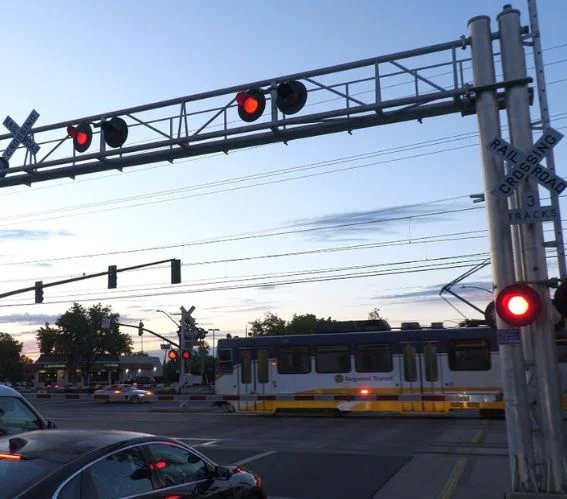
Permanent signal timing plans are designed for continuous operation and integrated into city wide traffic systems for maximum efficiency.
Permanent Signal Timing Features
- Full coordination with adjacent intersections.
- Adaptive systems using SCATS, ASCS, or similar technologies.
- Detailed documentation including phasing diagrams and detection settings.
- Integration with emergency pre-emption and transit signal priority.
- Compliance with regional standards (MUTCD, OTM Book 12, Austroads, NZTA).
Who Benefits from Signal Timing Plans?
Improving Mobility for All Road Users
Signal timing plans enhance the experience and safety of everyone on the road.
Stakeholders Served
- Drivers: Reduced delays and smoother travel.
- Pedestrians & Cyclists: Safer crossings and better accessibility.
- Transit Agencies: Improved bus priority and schedule adherence.
- Municipalities: Efficient traffic flow and reduced emissions.
- Emergency Services: Faster response times with signal pre-emption.
- Businesses: Better access and customer convenience.
Future of Traffic Signal Timing Plans
Smart Cities, AI & Sustainable Mobility
Signal timing is evolving with technology, making intersections smarter and more responsive to real time conditions.
Innovative Trends in Signal Timing
- AI & Machine Learning: Predictive models for real time optimization.
- Connected Vehicles (V2X): Signals adapt based on vehicle data.
- Cloud Based Retiming: GPS data used to recalibrate signals dynamically.
- Sustainability Integration: Reduced fuel consumption and emissions.
- Reinforcement Learning: Algorithms minimize queue lengths and delays.
- CAV Integration: Seamless flow for autonomous and connected vehicles.
Why Choose PLAN MY TRAFFIC?
- Expertise in both temporary and permanent signal timing plans
- Region-specific compliance with MUTCD, OTM Book 12, SCATS, AGTTM, NZTA
- Advanced modeling tools (Synchro, SimTraffic, VISSIM)
- Serving USA, Canada, Australia & New Zealand
Client Testimonials
The signal timing plan prepared for our busy corridor significantly improved peak-hour flow. The cycle length adjustments and phase coordination were clearly documented and technically sound. The supporting analysis made it easy for our internal review team to approve the recommendations.
Traffic Operations Supervisor, City Transportation DepartmentWe required a detailed signal timing study for several high-volume intersections. The documentation included clear phasing diagrams, pedestrian timing considerations, and coordination strategies. The structured report helped us implement improvements with confidence.
Senior Transportation Engineer, Municipal Authority
Defines green, yellow, and red times for vehicle and pedestrian movements.
Improves flow, reduces delays, and enhances safety.
Temporary is for construction/events; Permanent is for long-term optimization.
Cycle length design, interval optimization, pedestrian timing, and green wave coordination.
Yes, we work with SCATS, ASCS, and V2X.
USA, Canada, Australia, New Zealand.
Intersection geometry, traffic counts, and existing timings.
1 to 4 weeks.
Guidance and coordination only.
Yes, we ensure compliance.
Synchro, SimTraffic, VISSIM.
AI/ML, Cloud-based retiming, V2X, Sustainability metrics.
Depends on number of intersections and complexity.
Submit project details via our quote form.